Hachimycin
Hachimycin is a antibiotic compound that is derived from the Streptomyces bacteria. It is a member of the tetracycline class of antibiotics and is known for its broad-spectrum antibacterial activity.
History[edit]
Hachimycin was first isolated in 1958 by a team of Japanese scientists led by Hamao Umezawa. The compound was named after Hachiman, the Shinto god of war and agriculture, in recognition of its powerful antibacterial properties.
Structure and Properties[edit]
Hachimycin is a tetracycline antibiotic, which means it has a four-ring structure. It is a yellow crystalline substance that is soluble in ethanol and methanol, but insoluble in water. The molecular formula of hachimycin is C22H22N2O8.
Mechanism of Action[edit]
Like other tetracycline antibiotics, hachimycin works by inhibiting protein synthesis in bacteria. It does this by binding to the 30S subunit of the bacterial ribosome, preventing the attachment of aminoacyl-tRNA to the ribosome and thus blocking the addition of new amino acids to the growing peptide chain.
Clinical Use[edit]
Hachimycin has been used in the treatment of various bacterial infections, including those caused by Staphylococcus aureus, Streptococcus pneumoniae, and Escherichia coli. However, its use has been limited due to the development of antibiotic resistance and the availability of newer, more effective antibiotics.
Side Effects[edit]
As with other tetracycline antibiotics, the use of hachimycin can lead to a number of side effects, including nausea, vomiting, diarrhea, and photosensitivity. In rare cases, it can also cause serious side effects such as hepatotoxicity and nephrotoxicity.
See Also[edit]
List of tetracyclines
 | This medical article is a stub. You can help WikiMD by expanding the page. |
-
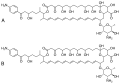 Hachimycin


Medical Disclaimer: WikiMD is for informational purposes only and is not a substitute for professional medical advice. Content may be inaccurate or outdated and should not be used for diagnosis or treatment. Always consult your healthcare provider for medical decisions. Verify information with trusted sources such as CDC.gov and NIH.gov. By using this site, you agree that WikiMD is not liable for any outcomes related to its content. See full disclaimer.
Credits:Most images are courtesy of Wikimedia commons, and templates, categories Wikipedia, licensed under CC BY SA or similar.
Translate page: - East Asian
中文,
日本,
한국어,
South Asian
हिन्दी,
தமிழ்,
తెలుగు,
Urdu,
ಕನ್ನಡ,
Southeast Asian
Indonesian,
Vietnamese,
Thai,
မြန်မာဘာသာ,
বাংলা
European
español,
Deutsch,
français,
Greek,
português do Brasil,
polski,
română,
русский,
Nederlands,
norsk,
svenska,
suomi,
Italian
Middle Eastern & African
عربى,
Turkish,
Persian,
Hebrew,
Afrikaans,
isiZulu,
Kiswahili,
Other
Bulgarian,
Hungarian,
Czech,
Swedish,
മലയാളം,
मराठी,
ਪੰਜਾਬੀ,
ગુજરાતી,
Portuguese,
Ukrainian

