Streptogramin B: Difference between revisions
CSV import Tags: mobile edit mobile web edit |
CSV import |
||
| Line 21: | Line 21: | ||
[[Category:Streptogramins]] | [[Category:Streptogramins]] | ||
{{Antibiotics-stub}} | {{Antibiotics-stub}} | ||
<gallery> | |||
File:Streptogramin_B_(aa_composition).png|Amino acid composition of Streptogramin B | |||
File:Streptogramin_B_(modules).png|Biosynthetic modules of Streptogramin B | |||
File:Cyclization_Streptogramin_B.png|Cyclization process in Streptogramin B biosynthesis | |||
</gallery> | |||
Latest revision as of 03:52, 18 February 2025
Streptogramin B is a type of antibiotic that belongs to the streptogramin family. It is produced by certain strains of Streptomyces bacteria and is used in combination with other antibiotics to treat various bacterial infections.
History[edit]
The discovery of streptogramin B dates back to the 1950s when it was first isolated from the soil bacterium Streptomyces pristinaespiralis. The antibiotic was found to have potent activity against a wide range of Gram-positive bacteria, including Staphylococcus aureus and Enterococcus faecium.
Mechanism of Action[edit]
Streptogramin B works by binding to the 50S ribosomal subunit of the bacterial ribosome, thereby inhibiting protein synthesis. This action is synergistic with that of streptogramin A, another member of the streptogramin family, which binds at a nearby site on the same ribosomal subunit. The combined effect of these two antibiotics is a potent bactericidal activity.
Clinical Use[edit]
Streptogramin B is used in combination with streptogramin A in the form of the drug quinupristin/dalfopristin. This combination is marketed under the brand name Synercid. It is used to treat serious or life-threatening infections caused by susceptible strains of Staphylococcus aureus and Enterococcus faecium, including those resistant to methicillin or vancomycin.
Resistance[edit]
Resistance to streptogramin B can occur through several mechanisms. These include modification of the antibiotic target site, active efflux of the antibiotic, and enzymatic inactivation of the antibiotic. The spread of resistance genes can occur through horizontal gene transfer, posing a significant challenge to the clinical use of this antibiotic.
See Also[edit]
| This article is a stub. You can help WikiMD by registering to expand it. |
-
 Amino acid composition of Streptogramin B
 -
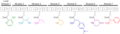 Biosynthetic modules of Streptogramin B
 -
 Cyclization process in Streptogramin B biosynthesis
.png)
.png)

