Pharmacology

Editor-In-Chief: Prab R Tumpati, MD
Obesity, Sleep & Internal medicine
Founder, WikiMD Wellnesspedia &
W8MD's medical weight loss NYC, sleep center NYC
Philadelphia medical weight loss and Philadelphia sleep clinics

Branch of science studying drug action on biological systems
Pharmacology
| Country or region | |
|---|---|
| Country | |
| Ethnic group | |
| Regional varieties | |
| National dish | |
| National dishes | |
| National drink | |
| National drinks | |
| See also |


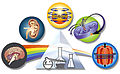
Pharmacology (from the Greek word φάρμακον pharmakon, meaning "drug" or "medicine", and -λογία -logia, meaning "study of") is the branch of medicine, biology, and pharmaceutical sciences concerned with the **study of drug action**. A drug is any natural, synthetic, or endogenous chemical substance that exerts a **biochemical or physiological effect** on the cell, tissue, organ, or organism.
More specifically, pharmacology studies the **interactions between living organisms and chemicals** that influence biological function. If a substance has beneficial therapeutic properties, it is classified as a pharmaceutical or medication.
Overview[edit]
Pharmacology encompasses the **discovery, characterization, and understanding of the properties and actions of drugs**. It investigates both the **mechanisms of action** and the **effects of substances** at various biological levels—molecular, cellular, systemic, and behavioral.
Substances studied in pharmacology may be:
- Exogenous compounds (introduced from outside the body)
- Endogenous compounds (produced naturally in the body)
- Natural products derived from plants or microbes
The goal of pharmacology is to understand how drugs interact with biological systems and how the body responds to these substances, both in healthy and diseased states.
Branches of pharmacology[edit]
Pharmacology is a multidisciplinary science with several specialized subfields:
- Pharmacodynamics – the study of what a drug does to the body, including mechanisms of action and drug-receptor interactions.
- Pharmacokinetics – the study of what the body does to a drug, including absorption, distribution, metabolism, and excretion (ADME).
- Clinical pharmacology – focuses on drug use in humans and the effects of drugs in clinical settings.
- Neuropharmacology – studies the effects of drugs on the nervous system.
- Psychopharmacology – explores the impact of drugs on mood, perception, behavior, and cognition.
- Toxicology – investigates the harmful effects of chemicals and drugs on living organisms.
- Pharmacogenomics – studies how genes affect an individual's response to drugs.
- Pharmacoepidemiology – evaluates the use and effects of drugs in large populations.
History[edit]
Pharmacology has ancient roots in herbal medicine and traditional healing. Modern pharmacology began to develop in the 19th century with the advancement of chemistry and physiology. Key milestones include:
- Isolation of morphine from opium in the early 1800s
- Discovery of anesthetics such as ether and chloroform
- Introduction of standardized drug testing in laboratories
The field expanded rapidly in the 20th century with the advent of **synthetic drugs**, **antibiotics**, and **hormone therapies**.
Applications[edit]
Pharmacology is essential in:
- **Drug development** – discovering and optimizing new therapeutic compounds
- **Clinical medicine** – prescribing drugs safely and effectively
- **Public health** – understanding drug effects in populations
- **Veterinary medicine** – applying pharmacological principles to animal health
Relation to other disciplines[edit]
Pharmacology differs from:
- Pharmacy: the science and practice of preparing and dispensing drugs.
- Medicinal chemistry: the design and chemical synthesis of pharmaceutical agents.
- Biochemistry: the study of chemical processes within living organisms.
Gallery[edit]
-
 Pharmacology
 -
 Pharmacology
 -
 Pharmacology
 -
 Pharmacology
 -
 Pharmacology

_(6009043040).jpg)


See also[edit]
- Glossary of pharmacology
- Dictionary of pharmacology
- Drug
- Pharmacist
- Drug development
- Pharmacovigilance
- Pharmaceutical industry
- Evidence-based medicine
| Pharmacology | ||||||||||||||||||||||||||||||||||
|---|---|---|---|---|---|---|---|---|---|---|---|---|---|---|---|---|---|---|---|---|---|---|---|---|---|---|---|---|---|---|---|---|---|---|
|
| Pharmacomodulation | ||||||||||||||
|---|---|---|---|---|---|---|---|---|---|---|---|---|---|---|
|
| Pharmacy | ||||||
|---|---|---|---|---|---|---|
* Category
|
| Biology | ||||||||||||
|---|---|---|---|---|---|---|---|---|---|---|---|---|
|
| Major chemical drug groups | ||||||||||
|---|---|---|---|---|---|---|---|---|---|---|
|
| Branches of biology | ||
|---|---|---|
|
| Branches of chemistry | ||||||||||
|---|---|---|---|---|---|---|---|---|---|---|
|
Ad. Transform your life with W8MD's
GLP-1 weight loss injections special from $29.99


W8MD Medical Weight Loss, Sleep and Medspa offers physician-supervised medical weight loss programs: NYC medical weight loss Philadelphia medical weight loss
Affordable GLP-1 Weight Loss ShotsAffordable GLP-1 Weight Loss Shots
Budget GLP-1 injections NYC (insurance & self-pay options) Popular treatments:
- Semaglutide starting from $29.99/week
- Tirzepatide starting from $45.00/week
✔ Most insurances accepted for visits ✔ Prior authorization support when eligible
Start your physician weight loss NYC journey today:
📍 NYC: Brooklyn weight loss center 📍 Philadelphia: Philadelphia weight loss center
📞 Call: 718-946-5500 (NYC) | 215-676-2334 (Philadelphia)
Tags: Affordable GLP1 weight loss NYC, Wegovy NYC, Zepbound NYC, Philadelphia medical weight loss


|
WikiMD Medical Encyclopedia |
Medical Disclaimer: WikiMD is not a substitute for professional medical advice. The information on WikiMD is provided as an information resource only, may be incorrect, outdated or misleading, and is not to be used or relied on for any diagnostic or treatment purposes. Please consult your health care provider before making any healthcare decisions or for guidance about a specific medical condition. WikiMD expressly disclaims responsibility, and shall have no liability, for any damages, loss, injury, or liability whatsoever suffered as a result of your reliance on the information contained in this site. By visiting this site you agree to the foregoing terms and conditions, which may from time to time be changed or supplemented by WikiMD. If you do not agree to the foregoing terms and conditions, you should not enter or use this site. See full disclaimer.
Credits:Most images are courtesy of Wikimedia commons, and templates, categories Wikipedia, licensed under CC BY SA or similar.
Translate this page: - East Asian
中文,
日本,
한국어,
South Asian
हिन्दी,
தமிழ்,
తెలుగు,
Urdu,
ಕನ್ನಡ,
Southeast Asian
Indonesian,
Vietnamese,
Thai,
မြန်မာဘာသာ,
বাংলা
European
español,
Deutsch,
français,
Greek,
português do Brasil,
polski,
română,
русский,
Nederlands,
norsk,
svenska,
suomi,
Italian
Middle Eastern & African
عربى,
Turkish,
Persian,
Hebrew,
Afrikaans,
isiZulu,
Kiswahili,
Other
Bulgarian,
Hungarian,
Czech,
Swedish,
മലയാളം,
मराठी,
ਪੰਜਾਬੀ,
ગુજરાતી,
Portuguese,
Ukrainian
