Metallurgy
Metallurgy is a domain of materials science and engineering that studies the physical and chemical behavior of metallic elements, their intermetallic compounds, and their mixtures, which are called alloys. Metallurgy encompasses both the science and the technology of metals; that is, the way in which science is applied to the production of metals, and the engineering of metal components used in products for both consumers and manufacturers.
History[edit]
Metallurgy dates back to 6000 BC, as evidenced by gold ornaments that date back to this period. The extraction of copper from its ores and the smelting of copper and tin into bronze was developed around 3500 BC. The discovery of iron smelting and blacksmithing is dated to around 2000 BC.
Types of Metallurgy[edit]
There are three main types of metallurgy: extractive metallurgy, physical metallurgy, and mineral processing.
Extractive Metallurgy[edit]
Extractive metallurgy involves the extraction of metal from its ore. This process involves several steps, including mining, concentration, roasting, and smelting to extract the metal.
Physical Metallurgy[edit]
Physical metallurgy involves the study of the physical properties of metals, such as strength, hardness, and ductility. This field also involves the study of how these properties can be changed through processes such as heat treatment.
Mineral Processing[edit]
Mineral processing involves the separation of valuable minerals from their ores. This can be done through several methods, including gravity separation, magnetic separation, and flotation.
See Also[edit]
- Materials science
- Engineering
- Metallic elements
- Intermetallic compounds
- Alloys
- Copper
- Iron smelting
- Blacksmithing
- Extractive metallurgy
- Physical metallurgy
- Mineral processing
 | This medical article is a stub. You can help WikiMD by expanding the page. |
-
 Processing gold
 -
 Pouring gold
 -
 Grave offerings
 -
 Metal production in Ancient Middle East
 -
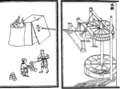 Yuan Dynasty - waterwheels and smelting
 -
 Iron electrolytic and 1cm3 cube
 -
 Bochumer Verein
 -
 Heat Treating Furnace
 -
 Copper electroplating principle (multilingual)
 -
 Alubronze CuAl20v500


.svg)

Medical Disclaimer: WikiMD is for informational purposes only and is not a substitute for professional medical advice. Content may be inaccurate or outdated and should not be used for diagnosis or treatment. Always consult your healthcare provider for medical decisions. Verify information with trusted sources such as CDC.gov and NIH.gov. By using this site, you agree that WikiMD is not liable for any outcomes related to its content. See full disclaimer.
Credits:Most images are courtesy of Wikimedia commons, and templates, categories Wikipedia, licensed under CC BY SA or similar.
Translate this page: - East Asian
中文,
日本,
한국어,
South Asian
हिन्दी,
தமிழ்,
తెలుగు,
Urdu,
ಕನ್ನಡ,
Southeast Asian
Indonesian,
Vietnamese,
Thai,
မြန်မာဘာသာ,
বাংলা
European
español,
Deutsch,
français,
Greek,
português do Brasil,
polski,
română,
русский,
Nederlands,
norsk,
svenska,
suomi,
Italian
Middle Eastern & African
عربى,
Turkish,
Persian,
Hebrew,
Afrikaans,
isiZulu,
Kiswahili,
Other
Bulgarian,
Hungarian,
Czech,
Swedish,
മലയാളം,
मराठी,
ਪੰਜਾਬੀ,
ગુજરાતી,
Portuguese,
Ukrainian
