Photopharmacology
Photopharmacology is a scientific discipline that combines aspects of pharmacology and photochemistry to study and develop drugs (or pharmaceuticals) that are activated by light. This field of study is particularly relevant in the development of targeted therapies, as it allows for spatial and temporal control over drug activity.
History[edit]
The concept of photopharmacology was first introduced in the late 20th century, following advancements in the understanding of how light can be used to manipulate the activity of molecules. The field has since grown, with significant research being conducted in the areas of cancer therapy, neuroscience, and immunology.
Principles[edit]
Photopharmacology involves the use of photoactivatable drugs, which are inactive in their initial state but can be activated by light of a specific wavelength. This allows for precise control over where and when the drug is active, reducing side effects and improving efficacy.
The process typically involves the use of a photoswitch, a molecule that can exist in two different states, each with different properties. The photoswitch is attached to the drug molecule, and the state of the photoswitch can be changed by exposure to light, thereby controlling the activity of the drug.
Applications[edit]
Photopharmacology has potential applications in a variety of medical fields. In oncology, for example, it could be used to develop targeted cancer therapies that are activated only at the tumor site, reducing damage to healthy tissue. In neurology, it could be used to control neuronal activity with light, providing a new approach to treating neurological disorders.
Future Directions[edit]
The field of photopharmacology is still in its early stages, and much research is needed to fully realize its potential. However, the ability to control drug activity with light offers exciting possibilities for the development of new, more effective therapies.
See Also[edit]
 | This medical article is a stub. You can help WikiMD by expanding the page. |
-
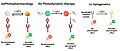 Photopharmacology
 -
Jablonski Diagram Representation
-
 Ruthenium Complex and Jablonski Diagram
 -
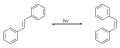 Stilbene Isomerization
 -
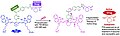 Photocage Example Process
 -
 Photopharmacology


Medical Disclaimer: WikiMD is for informational purposes only and is not a substitute for professional medical advice. Content may be inaccurate or outdated and should not be used for diagnosis or treatment. Always consult your healthcare provider for medical decisions. Verify information with trusted sources such as CDC.gov and NIH.gov. By using this site, you agree that WikiMD is not liable for any outcomes related to its content. See full disclaimer.
Credits:Most images are courtesy of Wikimedia commons, and templates, categories Wikipedia, licensed under CC BY SA or similar.
Translate page: - East Asian
中文,
日本,
한국어,
South Asian
हिन्दी,
தமிழ்,
తెలుగు,
Urdu,
ಕನ್ನಡ,
Southeast Asian
Indonesian,
Vietnamese,
Thai,
မြန်မာဘာသာ,
বাংলা
European
español,
Deutsch,
français,
Greek,
português do Brasil,
polski,
română,
русский,
Nederlands,
norsk,
svenska,
suomi,
Italian
Middle Eastern & African
عربى,
Turkish,
Persian,
Hebrew,
Afrikaans,
isiZulu,
Kiswahili,
Other
Bulgarian,
Hungarian,
Czech,
Swedish,
മലയാളം,
मराठी,
ਪੰਜਾਬੀ,
ગુજરાતી,
Portuguese,
Ukrainian


