Ro67-4853
Ro67-4853 is a specialized drug that finds its primary application within the realm of scientific research. Its main function is to act as a selective positive allosteric modulator, specifically targeting the metabotropic glutamate receptor subtype mGluR1.
Origin and Derivation[edit]
Ro67-4853 has its roots in the adaptation and modification of a precursor compound known as Ro01-6128. This precursor provided the foundational chemical structure upon which Ro67-4853 was developed, allowing for enhancements in its functionality and specificity.
Role in Research[edit]
Ro67-4853, due to its specific modulatory functions, has paved the way for numerous studies centered around the metabotropic glutamate receptor subtype mGluR1. This is especially important given the critical role that mGluR1 plays in various neurological processes and potential pathologies.
Furthermore, Ro67-4853 has not just been a subject of study in its own right, but it has also served as a foundational or 'lead' compound. This means that Ro67-4853 has been used as a reference or starting point for the synthesis of a plethora of other compounds. These newly derived compounds retain the core function of acting as mGluR1 positive modulators, but may exhibit variations in their potency, specificity, or other pharmacological properties.
Importance in Neuropharmacology[edit]
In the vast field of neuropharmacology, understanding the intricate signaling mechanisms within the brain is crucial. Allosteric modulators, such as Ro67-4853, play a pivotal role in this by providing a means to selectively enhance or inhibit specific receptors without directly activating or blocking them. This selective modulation can be invaluable in studies aimed at discerning the roles of particular receptors in neurological function and dysfunction.
Summary[edit]
Ro67-4853 stands as a testament to the continual evolution of drug design and research in the field of neuropharmacology. Its specific modulatory properties, combined with its history of derivation and its role as a lead compound, make it an essential tool for researchers delving into the mysteries of the brain's signaling pathways.
See Also[edit]

This WikiMD article can only be edited by registered and verified editors. You can log in or register.
| Glutamate receptor modulators | ||||||||||||||||||||||||||||||
|---|---|---|---|---|---|---|---|---|---|---|---|---|---|---|---|---|---|---|---|---|---|---|---|---|---|---|---|---|---|---|
|
|
-
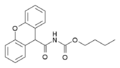 Ro67-4853 structure
 -
Ro67-4853


Medical Disclaimer: WikiMD is for informational purposes only and is not a substitute for professional medical advice. Content may be inaccurate or outdated and should not be used for diagnosis or treatment. Always consult your healthcare provider for medical decisions. Verify information with trusted sources such as CDC.gov and NIH.gov. By using this site, you agree that WikiMD is not liable for any outcomes related to its content. See full disclaimer.
Credits:Most images are courtesy of Wikimedia commons, and templates, categories Wikipedia, licensed under CC BY SA or similar.
Translate page: - East Asian
中文,
日本,
한국어,
South Asian
हिन्दी,
தமிழ்,
తెలుగు,
Urdu,
ಕನ್ನಡ,
Southeast Asian
Indonesian,
Vietnamese,
Thai,
မြန်မာဘာသာ,
বাংলা
European
español,
Deutsch,
français,
Greek,
português do Brasil,
polski,
română,
русский,
Nederlands,
norsk,
svenska,
suomi,
Italian
Middle Eastern & African
عربى,
Turkish,
Persian,
Hebrew,
Afrikaans,
isiZulu,
Kiswahili,
Other
Bulgarian,
Hungarian,
Czech,
Swedish,
മലയാളം,
मराठी,
ਪੰਜਾਬੀ,
ગુજરાતી,
Portuguese,
Ukrainian


