NS102
NS102 is a chemical compound that is used in neuroscience research. It is a selective, non-competitive antagonist at the kainate receptor, a type of ionotropic glutamate receptor. NS102 has been used in various studies to investigate the role of kainate receptors in the central nervous system.
Chemistry[edit]
NS102 is a quinazolinone derivative. It has a molecular weight of 366.4 g/mol and a chemical formula of C20H17N3O3. The compound is usually supplied as a hydrochloride salt.
Pharmacology[edit]
NS102 is a selective antagonist at the kainate receptor, meaning it binds to this receptor and prevents it from being activated by its natural ligand, glutamate. It does this in a non-competitive manner, meaning it does not compete with glutamate for the same binding site on the receptor. Instead, it binds to a separate site and changes the receptor's conformation so that glutamate cannot activate it.
Use in Research[edit]
NS102 has been used in various studies to investigate the role of kainate receptors in the central nervous system. For example, it has been used to study the receptors' role in synaptic plasticity, a process that is crucial for learning and memory. It has also been used to investigate the receptors' involvement in neurological disorders such as epilepsy and Parkinson's disease.
See Also[edit]
References[edit]

This WikiMD article can only be edited by registered and verified editors. You can log in or register.
NS102 gallery[edit]
-
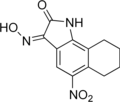 NS102
NS102

Advertise on WikiMD — 81,000+ full articles, ~900,000 total pages, ~250 million page views. Global reach, limited time promotional rates from $1/page/day. Learn more · View stats


Translate page: - East Asian
中文,
日本,
한국어,
South Asian
हिन्दी,
தமிழ்,
తెలుగు,
Urdu,
ಕನ್ನಡ,
Southeast Asian
Indonesian,
Vietnamese,
Thai,
မြန်မာဘာသာ,
বাংলা
European
español,
Deutsch,
français,
Greek,
português do Brasil,
polski,
română,
русский,
Nederlands,
norsk,
svenska,
suomi,
Italian
Middle Eastern & African
عربى,
Turkish,
Persian,
Hebrew,
Afrikaans,
isiZulu,
Kiswahili,
Other
Bulgarian,
Hungarian,
Czech,
Swedish,
മലയാളം,
मराठी,
ਪੰਜਾਬੀ,
ગુજરાતી,
Portuguese,
Ukrainian
About WikiMD • Contact • Disclaimer • Privacy • Copyright • Site statistics
Some content and images may originate from Wikimedia Commons or Wikipedia and remain subject to their stated licenses. Unless otherwise noted, eligible WikiMD content is available under CC BY-SA 4.0.
WikiMD Wellnesspedia — Free health & wellness information for patients, students, and health professionals.

