Farampator
Farampator (CX-691, ORG-24448) is an experimental drug that has been studied for its potential cognitive-enhancing effects. It acts primarily as an AMPA receptor positive allosteric modulator. AMPA receptors are a type of glutamate receptor, which are crucial for fast synaptic transmission in the central nervous system. By modulating these receptors, farampator aims to improve cognitive functions such as memory and learning.
Mechanism of Action[edit]
Farampator works by modulating the AMPA receptor, enhancing its response to the neurotransmitter glutamate. This modulation is believed to facilitate synaptic plasticity, which is a fundamental process in learning and memory. Unlike direct agonists, positive allosteric modulators like farampator do not directly activate the receptor but increase the receptor's response to natural ligands, in this case, glutamate. This property potentially makes farampator a safer alternative to direct agonists, reducing the risk of excitotoxicity—a condition where excessive glutamate activity leads to neuronal damage.
Clinical Trials and Research[edit]
Initial clinical trials have explored farampator's effects on cognitive functions, with a focus on its potential to treat conditions characterized by cognitive deficits, such as Alzheimer's disease, schizophrenia, and attention deficit hyperactivity disorder (ADHD). However, the results have been mixed, with some studies showing modest cognitive improvements in healthy adults and others indicating limited efficacy and significant side effects, such as headaches and nausea.
Potential Therapeutic Uses[edit]
The primary interest in farampator lies in its potential to enhance cognitive functions, making it a candidate for treating various neurological and psychiatric conditions. Its ability to modulate synaptic plasticity without directly activating glutamate receptors offers a novel approach to cognitive enhancement, potentially avoiding the side effects associated with other glutamatergic agents.
Safety and Side Effects[edit]
While farampator has shown promise in early clinical trials, its safety profile and side effects are areas of concern. Commonly reported side effects include headaches, nausea, and dizziness. The risk of excitotoxicity, although reduced compared to direct agonists, remains a theoretical concern due to the drug's mechanism of action.
Future Directions[edit]
Further research is needed to fully understand farampator's efficacy and safety profile. Future studies should aim to identify optimal dosing strategies, minimize side effects, and explore the drug's potential in treating a broader range of cognitive disorders.
See Also[edit]

 | This neuroscience article is a stub. You can help WikiMD by expanding the page. |
Farampator[edit]
-
 Farampator
 -
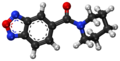 Farampator ball-and-stick model


Advertise on WikiMD — 81,000+ full articles, ~900,000 total pages, ~250 million page views. Global reach, limited time promotional rates from $1/page/day. Learn more · View stats

Medical Disclaimer: WikiMD is for informational purposes only and is not a substitute for professional medical advice. Content may be inaccurate or outdated and should not be used for diagnosis or treatment. Always consult your healthcare provider for medical decisions. Verify information with trusted sources such as CDC.gov and NIH.gov. By using this site, you agree that WikiMD is not liable for any outcomes related to its content. See full disclaimer.
Credits:Most images are courtesy of Wikimedia commons, and templates, categories Wikipedia, licensed under CC BY SA or similar.
Translate page: - East Asian
中文,
日本,
한국어,
South Asian
हिन्दी,
தமிழ்,
తెలుగు,
Urdu,
ಕನ್ನಡ,
Southeast Asian
Indonesian,
Vietnamese,
Thai,
မြန်မာဘာသာ,
বাংলা
European
español,
Deutsch,
français,
Greek,
português do Brasil,
polski,
română,
русский,
Nederlands,
norsk,
svenska,
suomi,
Italian
Middle Eastern & African
عربى,
Turkish,
Persian,
Hebrew,
Afrikaans,
isiZulu,
Kiswahili,
Other
Bulgarian,
Hungarian,
Czech,
Swedish,
മലയാളം,
मराठी,
ਪੰਜਾਬੀ,
ગુજરાતી,
Portuguese,
Ukrainian

