Amplang
-
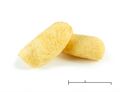 Amplang from Kotabaru, South Kalimantan
 -
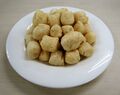 Amplang on a plate


Amplang[edit]
Amplang is a traditional Indonesian snack originating from the region of East Kalimantan. It is a type of cracker made primarily from fish, tapioca flour, and various seasonings. Amplang is known for its crunchy texture and savory flavor, making it a popular snack throughout Indonesia.
Ingredients and Preparation[edit]
The main ingredient in amplang is fish, commonly mackerel or tenggiri, which is a type of Spanish mackerel. The fish is deboned and ground into a paste. This fish paste is then mixed with tapioca flour, which acts as a binding agent, and seasoned with garlic, salt, and sometimes sugar to enhance the flavor.
The mixture is kneaded into a dough, which is then shaped into small balls or cylinders. These pieces are deep-fried in hot oil until they become golden brown and crispy. The frying process is crucial as it gives amplang its characteristic crunchiness.
Variations[edit]
While the traditional amplang is made with fish, there are several variations that incorporate different ingredients. Some versions use prawns or squid instead of fish, providing a different taste and texture. Additionally, modern variations may include flavorings such as chili, cheese, or seaweed to cater to diverse palates.
Cultural Significance[edit]
Amplang holds cultural significance in East Kalimantan, where it is often served during special occasions and celebrations. It is also a popular souvenir for visitors to the region, symbolizing the rich culinary heritage of Kalimantan.
The production of amplang is often a family or community activity, with traditional recipes passed down through generations. This snack not only represents a culinary tradition but also reflects the social and cultural practices of the local communities.
Related Pages[edit]


Medical Disclaimer: WikiMD is for informational purposes only and is not a substitute for professional medical advice. Content may be inaccurate or outdated and should not be used for diagnosis or treatment. Always consult your healthcare provider for medical decisions. Verify information with trusted sources such as CDC.gov and NIH.gov. By using this site, you agree that WikiMD is not liable for any outcomes related to its content. See full disclaimer.
Credits:Most images are courtesy of Wikimedia commons, and templates, categories Wikipedia, licensed under CC BY SA or similar.
Translate page: - East Asian
中文,
日本,
한국어,
South Asian
हिन्दी,
தமிழ்,
తెలుగు,
Urdu,
ಕನ್ನಡ,
Southeast Asian
Indonesian,
Vietnamese,
Thai,
မြန်မာဘာသာ,
বাংলা
European
español,
Deutsch,
français,
Greek,
português do Brasil,
polski,
română,
русский,
Nederlands,
norsk,
svenska,
suomi,
Italian
Middle Eastern & African
عربى,
Turkish,
Persian,
Hebrew,
Afrikaans,
isiZulu,
Kiswahili,
Other
Bulgarian,
Hungarian,
Czech,
Swedish,
മലയാളം,
मराठी,
ਪੰਜਾਬੀ,
ગુજરાતી,
Portuguese,
Ukrainian

