Pastel (food)
Pastel is a term used in various cultures to refer to different types of baked goods, typically sweet in nature. The word "pastel" comes from the Italian "pastello", meaning "paste". In many cultures, pastels are a staple of celebrations and holidays.
Origins and History[edit]
The concept of the pastel has its roots in ancient times. The Romans were known to have sweet pastries, which they sweetened with honey. The tradition of sweet pastries was carried on in the Middle Ages, where they were sold in pastry shops, or "pastillaries".
Variations[edit]
There are many variations of pastels, depending on the region and culture.
Brazilian Pastel[edit]
In Brazil, a pastel is a typical fast-food Brazilian dish, consisting of thin pastry envelopes wrapped around assorted fillings, then deep fried in vegetable oil. The result is a crispy, brownish fried pie. The most common fillings are ground meat, mozzarella, heart of palm, catupiry cream cheese, chicken and small shrimp.
Filipino Pastel[edit]
In the Philippines, pastel is a type of bun filled with a sweet pastel-colored custard, and is a popular delicacy in Camiguin. It is also known as pastel de Camiguin.
Portuguese Pastel[edit]
In Portugal, pastel is typically a type of pastry filled with cream or fruit, often enjoyed with coffee. The most famous is the Pastel de nata, a Portuguese egg tart pastry.
See Also[edit]
References[edit]

-
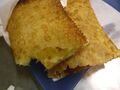 A Brazilian pastel, a popular street food in Brazil.
 -
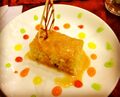 Tres Leches cake, a dessert made with three types of milk.
 -
 Pastel filled with vegetables and meat.


Medical Disclaimer: WikiMD is for informational purposes only and is not a substitute for professional medical advice. Content may be inaccurate or outdated and should not be used for diagnosis or treatment. Always consult your healthcare provider for medical decisions. Verify information with trusted sources such as CDC.gov and NIH.gov. By using this site, you agree that WikiMD is not liable for any outcomes related to its content. See full disclaimer.
Credits:Most images are courtesy of Wikimedia commons, and templates, categories Wikipedia, licensed under CC BY SA or similar.
Translate page: - East Asian
中文,
日本,
한국어,
South Asian
हिन्दी,
தமிழ்,
తెలుగు,
Urdu,
ಕನ್ನಡ,
Southeast Asian
Indonesian,
Vietnamese,
Thai,
မြန်မာဘာသာ,
বাংলা
European
español,
Deutsch,
français,
Greek,
português do Brasil,
polski,
română,
русский,
Nederlands,
norsk,
svenska,
suomi,
Italian
Middle Eastern & African
عربى,
Turkish,
Persian,
Hebrew,
Afrikaans,
isiZulu,
Kiswahili,
Other
Bulgarian,
Hungarian,
Czech,
Swedish,
മലയാളം,
मराठी,
ਪੰਜਾਬੀ,
ગુજરાતી,
Portuguese,
Ukrainian

