Apam balik
-
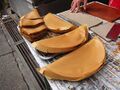 Giant Apam Balik
 -
Martabak Pizza
-
Martabak Manis Complit
-
Martabak Toblerone
-
Martabak Bangka
-
Martabak Mini
-
Apam Balik

Apam Balik[edit]
Apam Balik is a type of pancake that is commonly found in Southeast Asia, particularly in Malaysia, Indonesia, Brunei, and Singapore. It is a popular street food and is known for its sweet, crispy, and fluffy texture. The dish is also referred to by various names in different regions, such as "terang bulan" in Indonesia and "ban jian kuih" in some parts of Malaysia.
History[edit]
The origins of Apam Balik can be traced back to the Chinese community in Southeast Asia. It is believed to have been influenced by traditional Chinese pancakes, which were adapted to local tastes and ingredients. Over time, Apam Balik has become a staple snack in the region, enjoyed by people of all ages.
Preparation[edit]
Apam Balik is made using a batter that typically consists of flour, sugar, baking soda, eggs, and coconut milk. The batter is poured onto a hot griddle or specialized pan, where it is cooked until the edges become crispy and the center remains soft and fluffy.
Once the pancake is partially cooked, it is topped with a variety of fillings. The most common filling includes crushed peanuts, sugar, and sweet corn. Some variations may also include butter, margarine, or condensed milk for added richness. After the fillings are added, the pancake is folded in half, creating a semi-circular shape.
Variations[edit]
There are several variations of Apam Balik, each with its own unique twist. Some popular variations include:
- Thin and Crispy: This version is cooked longer to achieve a thin, crispy texture throughout.
- Thick and Fluffy: This version is thicker and has a softer, more cake-like texture.
- Savory: Some versions include savory fillings such as cheese, chicken floss, or tuna.
Cultural Significance[edit]
Apam Balik is more than just a snack; it is a part of the cultural fabric of Southeast Asia. It is often sold at night markets, food stalls, and festivals, where it is enjoyed by locals and tourists alike. The dish is a testament to the region's rich culinary diversity and the blending of different cultural influences.
Related Pages[edit]
Template:Southeast Asian cuisine


Medical Disclaimer: WikiMD is for informational purposes only and is not a substitute for professional medical advice. Content may be inaccurate or outdated and should not be used for diagnosis or treatment. Always consult your healthcare provider for medical decisions. Verify information with trusted sources such as CDC.gov and NIH.gov. By using this site, you agree that WikiMD is not liable for any outcomes related to its content. See full disclaimer.
Credits:Most images are courtesy of Wikimedia commons, and templates, categories Wikipedia, licensed under CC BY SA or similar.
Translate page: - East Asian
中文,
日本,
한국어,
South Asian
हिन्दी,
தமிழ்,
తెలుగు,
Urdu,
ಕನ್ನಡ,
Southeast Asian
Indonesian,
Vietnamese,
Thai,
မြန်မာဘာသာ,
বাংলা
European
español,
Deutsch,
français,
Greek,
português do Brasil,
polski,
română,
русский,
Nederlands,
norsk,
svenska,
suomi,
Italian
Middle Eastern & African
عربى,
Turkish,
Persian,
Hebrew,
Afrikaans,
isiZulu,
Kiswahili,
Other
Bulgarian,
Hungarian,
Czech,
Swedish,
മലയാളം,
मराठी,
ਪੰਜਾਬੀ,
ગુજરાતી,
Portuguese,
Ukrainian


