Pastel de nata
Pastel de nata is a popular Portuguese egg tart pastry that originated in the country's capital, Lisbon. The pastries are small, sweet, and often served with coffee or tea. They are a staple in Portuguese bakeries and cafes, and have gained popularity worldwide.
History[edit]
The history of the pastel de nata dates back to the 18th century, when they were first made by Catholic monks at the Jerónimos Monastery in Belém, Lisbon. The monks used egg whites to starch their clothes, and the leftover yolks were used to make pastries, including the pastel de nata.
Preparation[edit]
The preparation of a pastel de nata involves making a dough, filling it with a custard made from egg yolks, sugar, and cream, and then baking it until the top is caramelized and the crust is crispy. The pastries are often dusted with powdered sugar and cinnamon before serving.
Variations[edit]
There are several variations of the pastel de nata around the world. In Macau, a former Portuguese colony, the pastries are known as pastel de nata de Macau and are made with a flakier crust. In Brazil, they are known as pastel de Belém, named after the district in Lisbon where they originated.
Popularity[edit]
The popularity of the pastel de nata has spread beyond Portugal's borders. They are now a common sight in bakeries and cafes around the world, from London to New York to Sydney. In 2011, the Guardian named the pastel de nata as one of the 50 best things to eat in the world.
See Also[edit]
References[edit]
- Portuguese Food: A Guide to Portugal's Delicious Cuisine
- The History of the Pastel de Nata
- The Guardian: 50 best things to eat in the world
Pastel de nata[edit]
-
 Pastéis de Belém
 -
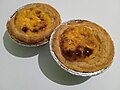 Tart telur Portugis (Pastéis de nata)
 -
 Portuguese egg tart in Macau

_20230409_194702.jpg)


Medical Disclaimer: WikiMD is for informational purposes only and is not a substitute for professional medical advice. Content may be inaccurate or outdated and should not be used for diagnosis or treatment. Always consult your healthcare provider for medical decisions. Verify information with trusted sources such as CDC.gov and NIH.gov. By using this site, you agree that WikiMD is not liable for any outcomes related to its content. See full disclaimer.
Credits:Most images are courtesy of Wikimedia commons, and templates, categories Wikipedia, licensed under CC BY SA or similar.
Translate page: - East Asian
中文,
日本,
한국어,
South Asian
हिन्दी,
தமிழ்,
తెలుగు,
Urdu,
ಕನ್ನಡ,
Southeast Asian
Indonesian,
Vietnamese,
Thai,
မြန်မာဘာသာ,
বাংলা
European
español,
Deutsch,
français,
Greek,
português do Brasil,
polski,
română,
русский,
Nederlands,
norsk,
svenska,
suomi,
Italian
Middle Eastern & African
عربى,
Turkish,
Persian,
Hebrew,
Afrikaans,
isiZulu,
Kiswahili,
Other
Bulgarian,
Hungarian,
Czech,
Swedish,
മലയാളം,
मराठी,
ਪੰਜਾਬੀ,
ગુજરાતી,
Portuguese,
Ukrainian

