Tempoyak
Tempoyak is a traditional fermented food product from Southeast Asia, particularly popular in Malaysia and Indonesia. It is made from durian, a fruit known for its strong smell and unique taste. Tempoyak is often used as a condiment or ingredient in various dishes, adding a distinctive flavor profile.
Preparation[edit]
The preparation of Tempoyak involves fermenting durian pulp with salt over a period of several days. The durian pulp is first removed from the fruit and mixed with salt. This mixture is then stored in a jar or container and left to ferment at room temperature. The fermentation process can take anywhere from three days to several weeks, depending on the desired taste and texture. The end result is a paste-like substance with a pungent aroma and a sour, slightly sweet taste.
Uses[edit]
Tempoyak is used in a variety of dishes in both Malaysia and Indonesia. In Malaysia, it is often used in a dish called Tempoyak Ikan Patin, a popular fish curry. In Indonesia, Tempoyak is a key ingredient in Brengkes Tempoyak, a dish made with fish and wrapped in banana leaves. It can also be eaten with rice or used as a flavoring in stir-fry dishes.
Cultural Significance[edit]
Tempoyak holds a significant cultural value in the regions where it is consumed. It is often made at home and passed down through generations. The process of making Tempoyak is considered a traditional skill and is often associated with communal and family activities. In recent years, Tempoyak has also gained recognition as a unique and distinctive element of Southeast Asian cuisine.
Health Benefits[edit]
As a fermented food, Tempoyak is rich in probiotics, which are beneficial for gut health. It also contains the nutritional benefits of durian, including high levels of vitamin C, potassium, and dietary fiber.
See Also[edit]

-
Tempoyak with belacan
-
Tempoyak
-
Tempoyak with Ikan Patin
-
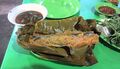 Brengkes Tempoyak Iwak Lais


Medical Disclaimer: WikiMD is for informational purposes only and is not a substitute for professional medical advice. Content may be inaccurate or outdated and should not be used for diagnosis or treatment. Always consult your healthcare provider for medical decisions. Verify information with trusted sources such as CDC.gov and NIH.gov. By using this site, you agree that WikiMD is not liable for any outcomes related to its content. See full disclaimer.
Credits:Most images are courtesy of Wikimedia commons, and templates, categories Wikipedia, licensed under CC BY SA or similar.
Translate page: - East Asian
中文,
日本,
한국어,
South Asian
हिन्दी,
தமிழ்,
తెలుగు,
Urdu,
ಕನ್ನಡ,
Southeast Asian
Indonesian,
Vietnamese,
Thai,
မြန်မာဘာသာ,
বাংলা
European
español,
Deutsch,
français,
Greek,
português do Brasil,
polski,
română,
русский,
Nederlands,
norsk,
svenska,
suomi,
Italian
Middle Eastern & African
عربى,
Turkish,
Persian,
Hebrew,
Afrikaans,
isiZulu,
Kiswahili,
Other
Bulgarian,
Hungarian,
Czech,
Swedish,
മലയാളം,
मराठी,
ਪੰਜਾਬੀ,
ગુજરાતી,
Portuguese,
Ukrainian


