Lumpia goreng
Lumpia goreng is a traditional Indonesian and Filipino dish, often served as an appetizer or snack. It is a type of spring roll that is deep-fried, giving it a crispy texture. The name "lumpia" derives from "lunpia" in the Hokkien dialect, which is a type of Chinese spring roll. The term "goreng" means "fried" in Indonesian and Malay.
History[edit]
The dish is believed to have been introduced to Indonesia and the Philippines by Chinese immigrants. The original Chinese spring roll was adapted to local tastes and ingredients, resulting in the creation of lumpia goreng. It is now a staple in both Indonesian and Filipino cuisines.
Preparation[edit]
Lumpia goreng is made by wrapping a mixture of chopped vegetables and sometimes meat in a thin pastry sheet. The filling typically includes ingredients such as carrots, bamboo shoots, leeks, and minced chicken or pork. The wrapped rolls are then deep-fried until golden brown.
Serving[edit]
Lumpia goreng is usually served with a dipping sauce, such as sweet and sour sauce or chili sauce. In Indonesia, it is often served as a side dish with nasi goreng (fried rice), while in the Philippines, it is commonly served as a snack or appetizer.
Variations[edit]
There are many variations of lumpia goreng, depending on the region and personal preference. Some versions may include shrimp, tofu, or bean sprouts in the filling. There is also a sweet version, called lumpia semarang, which is filled with bamboo shoots and dried shrimp and served with a sweet sauce.
See also[edit]

 | This Philippines-food article is a stub. You can help WikiMD by expanding the page. |
Lumpia goreng[edit]
-
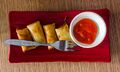 Lumpia at Teh Jawa, Purwokerto Station, Purwokerto, 2015-03-20


Medical Disclaimer: WikiMD is for informational purposes only and is not a substitute for professional medical advice. Content may be inaccurate or outdated and should not be used for diagnosis or treatment. Always consult your healthcare provider for medical decisions. Verify information with trusted sources such as CDC.gov and NIH.gov. By using this site, you agree that WikiMD is not liable for any outcomes related to its content. See full disclaimer.
Credits:Most images are courtesy of Wikimedia commons, and templates, categories Wikipedia, licensed under CC BY SA or similar.
Translate page: - East Asian
中文,
日本,
한국어,
South Asian
हिन्दी,
தமிழ்,
తెలుగు,
Urdu,
ಕನ್ನಡ,
Southeast Asian
Indonesian,
Vietnamese,
Thai,
မြန်မာဘာသာ,
বাংলা
European
español,
Deutsch,
français,
Greek,
português do Brasil,
polski,
română,
русский,
Nederlands,
norsk,
svenska,
suomi,
Italian
Middle Eastern & African
عربى,
Turkish,
Persian,
Hebrew,
Afrikaans,
isiZulu,
Kiswahili,
Other
Bulgarian,
Hungarian,
Czech,
Swedish,
മലയാളം,
मराठी,
ਪੰਜਾਬੀ,
ગુજરાતી,
Portuguese,
Ukrainian

