Nasi campur
Indonesian mixed rice dish
Nasi campur is a popular Indonesian dish that consists of a plate of rice served with a variety of side dishes. The name "nasi campur" translates to "mixed rice" in Indonesian, reflecting the diverse components that make up the meal. This dish is a staple in Indonesian households and is also widely enjoyed in other Southeast Asian countries, each with its own regional variations.
Components[edit]
Nasi campur typically includes a serving of steamed white rice accompanied by an assortment of side dishes. These side dishes can vary widely but often include:
- Satay: Skewered and grilled meat, usually chicken or beef, served with a spicy peanut sauce.
- Rendang: A slow-cooked dry curry made with beef, coconut milk, and a rich blend of spices.
- Tempeh: Fermented soybean cake, often fried or cooked in a sweet soy sauce.
- Tofu: Bean curd that can be fried or cooked in various sauces.
- Sambal: A spicy chili paste that adds heat and flavor to the dish.
- Vegetables: Such as kangkung (water spinach) or gulai (vegetable curry).
- Egg: Often boiled or fried, sometimes served as an omelet.
Regional Variations[edit]
Nasi campur is a versatile dish that varies significantly across different regions of Indonesia and Southeast Asia. Some notable variations include:
- Bali: In Bali, nasi campur often includes lawar, a traditional Balinese salad made with vegetables, coconut, and minced meat.
- Java: Javanese nasi campur might feature gudeg, a sweet jackfruit stew, and opor ayam, a chicken dish cooked in coconut milk.
- Sumatra: Sumatran versions may include spicy rendang and dendeng, a type of dried meat.
Cultural Significance[edit]
Nasi campur is more than just a meal; it is a reflection of Indonesia's rich cultural diversity. Each component of the dish represents different culinary traditions and local ingredients. It is commonly served at family gatherings, celebrations, and as a daily meal, showcasing the communal and inclusive nature of Indonesian dining.
Preparation and Serving[edit]
The preparation of nasi campur involves cooking each side dish separately, allowing for a variety of flavors and textures. The rice is typically served in the center of the plate, with the side dishes arranged around it. This presentation not only makes the dish visually appealing but also allows diners to sample a little of everything.
Related pages[edit]
-
Plate of nasi campur
-
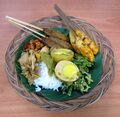 Nasi Campur Bali Sate Lilit
 -
Nasi Campur Tionghoa Kenanga
-
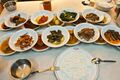 Minangkabau cuisine Bukittingi
 -
Nasi campur
-
Nasi campur sop saudara warung Pangkep
-
Nasi campur
-
Nasi campur
-
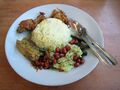 Nasi Campur Bali Ayam Betutu
 -
Nasi campur rawon
-
Nasi campur sop saudara Jeneponto
-
Javanese nasi campur


Medical Disclaimer: WikiMD is for informational purposes only and is not a substitute for professional medical advice. Content may be inaccurate or outdated and should not be used for diagnosis or treatment. Always consult your healthcare provider for medical decisions. Verify information with trusted sources such as CDC.gov and NIH.gov. By using this site, you agree that WikiMD is not liable for any outcomes related to its content. See full disclaimer.
Credits:Most images are courtesy of Wikimedia commons, and templates, categories Wikipedia, licensed under CC BY SA or similar.
Translate page: - East Asian
中文,
日本,
한국어,
South Asian
हिन्दी,
தமிழ்,
తెలుగు,
Urdu,
ಕನ್ನಡ,
Southeast Asian
Indonesian,
Vietnamese,
Thai,
မြန်မာဘာသာ,
বাংলা
European
español,
Deutsch,
français,
Greek,
português do Brasil,
polski,
română,
русский,
Nederlands,
norsk,
svenska,
suomi,
Italian
Middle Eastern & African
عربى,
Turkish,
Persian,
Hebrew,
Afrikaans,
isiZulu,
Kiswahili,
Other
Bulgarian,
Hungarian,
Czech,
Swedish,
മലയാളം,
मराठी,
ਪੰਜਾਬੀ,
ગુજરાતી,
Portuguese,
Ukrainian


.png)


