Stroopwafel
Stroopwafel is a traditional Dutch dessert, originating from the city of Gouda. It is a type of waffle made from two thin layers of baked dough with a caramel-like syrup filling in the middle. Stroopwafels are popular in the Netherlands and have been well-received globally.
History[edit]
The first known recipe for the Stroopwafel dates back to the 18th century. It was created by a baker from Gouda, who started making waffles from old breadcrumbs and filled them with syrup. The dessert quickly gained popularity and by the 19th century, there were around 100 stroopwafel bakeries in Gouda alone.
Preparation[edit]
The dough for Stroopwafels is made from flour, butter, brown sugar, yeast, milk, and eggs. The ingredients are mixed together and allowed to rest. The dough is then rolled out and cut into round waffle shapes. The syrup is a mixture of brown sugar, butter, and cinnamon, which is heated until it forms a thick caramel. The waffles are baked on a hot waffle iron and the syrup is spread between two waffles while they are still warm.
Variations[edit]
There are several variations of the Stroopwafel. Some bakeries in the Netherlands still make them by hand and use a secret family recipe for the syrup. In addition to the traditional stroopwafel, there are also chocolate-covered versions and ones with different types of filling, such as honey or maple syrup.
Global Popularity[edit]
While Stroopwafels are a staple in Dutch cuisine, they have also gained popularity worldwide. They are often served in cafes and restaurants, and are also available in supermarkets and online stores. In recent years, stroopwafels have been incorporated into various desserts, such as ice cream and cheesecake.
See Also[edit]
This Dutch cuisine related article is a stub. You can help WikiMD by expanding it.

Stroopwafel[edit]
-
Stroopwafels
-
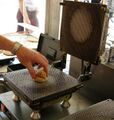 Stroopwafel iron
 -
Stroopwafel
-
How to eat a stroopwafel


Medical Disclaimer: WikiMD is for informational purposes only and is not a substitute for professional medical advice. Content may be inaccurate or outdated and should not be used for diagnosis or treatment. Always consult your healthcare provider for medical decisions. Verify information with trusted sources such as CDC.gov and NIH.gov. By using this site, you agree that WikiMD is not liable for any outcomes related to its content. See full disclaimer.
Credits:Most images are courtesy of Wikimedia commons, and templates, categories Wikipedia, licensed under CC BY SA or similar.
Translate page: - East Asian
中文,
日本,
한국어,
South Asian
हिन्दी,
தமிழ்,
తెలుగు,
Urdu,
ಕನ್ನಡ,
Southeast Asian
Indonesian,
Vietnamese,
Thai,
မြန်မာဘာသာ,
বাংলা
European
español,
Deutsch,
français,
Greek,
português do Brasil,
polski,
română,
русский,
Nederlands,
norsk,
svenska,
suomi,
Italian
Middle Eastern & African
عربى,
Turkish,
Persian,
Hebrew,
Afrikaans,
isiZulu,
Kiswahili,
Other
Bulgarian,
Hungarian,
Czech,
Swedish,
മലയാളം,
मराठी,
ਪੰਜਾਬੀ,
ગુજરાતી,
Portuguese,
Ukrainian


.jpg)