Zhaliang
Zhaliang is a popular Cantonese dish, often served as a part of a traditional dim sum meal. It is a combination of two separate dishes, cheung fun (rice noodle roll) and youtiao (fried dough stick), creating a unique blend of textures and flavors.
History[edit]
The origins of zhaliang are rooted in the culinary traditions of Guangdong province, China. It is believed to have been created as a fusion of two popular breakfast items, cheung fun and youtiao, to provide a filling and balanced meal.
Preparation[edit]
Zhaliang is prepared by wrapping a freshly fried youtiao in a thin layer of steamed rice noodle. The youtiao provides a crispy texture and savory flavor, while the cheung fun adds a soft and smooth texture. The dish is typically served with soy sauce for dipping, and may be garnished with sesame seeds and chopped scallions.
Cultural Significance[edit]
Zhaliang is a staple in Cantonese dim sum and is often enjoyed during yum cha sessions, a traditional Cantonese brunch with tea. It is also a common street food in many parts of southern China and Hong Kong. The dish's combination of simple ingredients and complex textures has made it a favorite among both locals and tourists.
See Also[edit]
| Dim sum | ||||||
|---|---|---|---|---|---|---|
|
|
Part of a series on |
|
[[File: |
|
|
Overseas cuisine |
|
Religious cuisines |
|
Ingredients and types of food |
|
See also |
|
|

| Street food | ||||||||
|---|---|---|---|---|---|---|---|---|
|

Zhaliang[edit]
-
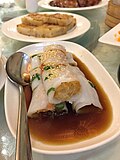 Zhaliang
.jpg)

Medical Disclaimer: WikiMD is for informational purposes only and is not a substitute for professional medical advice. Content may be inaccurate or outdated and should not be used for diagnosis or treatment. Always consult your healthcare provider for medical decisions. Verify information with trusted sources such as CDC.gov and NIH.gov. By using this site, you agree that WikiMD is not liable for any outcomes related to its content. See full disclaimer.
Credits:Most images are courtesy of Wikimedia commons, and templates, categories Wikipedia, licensed under CC BY SA or similar.
Translate page: - East Asian
中文,
日本,
한국어,
South Asian
हिन्दी,
தமிழ்,
తెలుగు,
Urdu,
ಕನ್ನಡ,
Southeast Asian
Indonesian,
Vietnamese,
Thai,
မြန်မာဘာသာ,
বাংলা
European
español,
Deutsch,
français,
Greek,
português do Brasil,
polski,
română,
русский,
Nederlands,
norsk,
svenska,
suomi,
Italian
Middle Eastern & African
عربى,
Turkish,
Persian,
Hebrew,
Afrikaans,
isiZulu,
Kiswahili,
Other
Bulgarian,
Hungarian,
Czech,
Swedish,
മലയാളം,
मराठी,
ਪੰਜਾਬੀ,
ગુજરાતી,
Portuguese,
Ukrainian

