Malatang
Malatang is a popular street food dish that originated from Sichuan cuisine. The name "Malatang" is derived from the Chinese words "mala" meaning numbing and spicy, and "tang" meaning hot soup. This dish is known for its characteristic combination of spiciness and numbness, brought about by the use of Sichuan pepper and chili pepper in its broth.
History[edit]
Malatang originated from the Sichuan Province in China, where it was initially a simple dish served by food vendors. It has since evolved into a complex dish with a variety of ingredients and flavors, and has spread to other parts of China and the world.
Preparation[edit]
The preparation of Malatang involves boiling a variety of ingredients in a spicy broth. The ingredients typically include a combination of meat, vegetables, and noodles. The broth is made from a base of bone broth, to which a variety of spices and seasonings are added, including Sichuan pepper, chili pepper, and other ingredients such as star anise, fennel seeds, and garlic.
Serving[edit]
Malatang is typically served in a communal pot, where diners can select their preferred ingredients from a buffet-style selection. The ingredients are then cooked in the spicy broth and served in individual bowls. The dish is often accompanied by a dipping sauce made from sesame paste, garlic, and other seasonings.
Popularity[edit]
Malatang has gained popularity not only in China, but also in other parts of the world. It is particularly popular in cities with large Chinese communities, such as New York City, Los Angeles, and Sydney. The dish's unique combination of flavors and its customizable nature have contributed to its widespread appeal.
Variations[edit]
There are many variations of Malatang, reflecting regional preferences and adaptations. For example, in Beijing, Malatang is often served with a thicker broth and more meat, while in Shanghai, the broth is typically lighter and the dish includes more seafood.

-
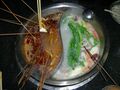 Malatang
 -
Malatang in Sanlitun, Beijing
-
Malatang shop ingredients
-
Malatang bowl


Medical Disclaimer: WikiMD is for informational purposes only and is not a substitute for professional medical advice. Content may be inaccurate or outdated and should not be used for diagnosis or treatment. Always consult your healthcare provider for medical decisions. Verify information with trusted sources such as CDC.gov and NIH.gov. By using this site, you agree that WikiMD is not liable for any outcomes related to its content. See full disclaimer.
Credits:Most images are courtesy of Wikimedia commons, and templates, categories Wikipedia, licensed under CC BY SA or similar.
Translate page: - East Asian
中文,
日本,
한국어,
South Asian
हिन्दी,
தமிழ்,
తెలుగు,
Urdu,
ಕನ್ನಡ,
Southeast Asian
Indonesian,
Vietnamese,
Thai,
မြန်မာဘာသာ,
বাংলা
European
español,
Deutsch,
français,
Greek,
português do Brasil,
polski,
română,
русский,
Nederlands,
norsk,
svenska,
suomi,
Italian
Middle Eastern & African
عربى,
Turkish,
Persian,
Hebrew,
Afrikaans,
isiZulu,
Kiswahili,
Other
Bulgarian,
Hungarian,
Czech,
Swedish,
മലയാളം,
मराठी,
ਪੰਜਾਬੀ,
ગુજરાતી,
Portuguese,
Ukrainian


