Crispy fried chicken
Crispy Fried Chicken is a popular culinary dish consisting of chicken that is seasoned and deep-fried until it achieves a crispy, golden-brown exterior. The dish is a staple in many cuisines around the world, including American, Chinese, and Korean.
History[edit]
The origins of crispy fried chicken are believed to be in the Southern United States, where it became a staple in soul food cuisine. The dish was brought to America by Scottish immigrants, who had a tradition of deep-frying chicken in fat. The Scottish recipe was later adapted by African slaves in the South, who added seasonings and spices to enhance the flavor.
Preparation[edit]
The preparation of crispy fried chicken involves several steps. First, the chicken is typically marinated in a mixture of buttermilk and spices, which helps to tenderize the meat and infuse it with flavor. The chicken is then coated in a batter made from flour and additional seasonings. The coated chicken is deep-fried in hot oil until it becomes crispy and golden brown. Some variations of the dish may include additional steps, such as double-frying the chicken for extra crispiness or glazing it with a spicy sauce.
Variations[edit]
There are many variations of crispy fried chicken around the world. In the United States, the dish is often served with mashed potatoes and gravy, while in China, it is commonly paired with rice and vegetables. In Korea, crispy fried chicken is a popular anju dish, often enjoyed with beer or soju.
Health considerations[edit]
While crispy fried chicken is a delicious and popular dish, it is high in fat and calories, which can contribute to obesity and other health problems if consumed in excess. Many health-conscious individuals and restaurants have developed healthier versions of the dish, using methods such as air frying or baking to achieve a crispy texture without the need for deep-frying.

-
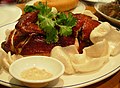 Crispy fried chicken


Medical Disclaimer: WikiMD is for informational purposes only and is not a substitute for professional medical advice. Content may be inaccurate or outdated and should not be used for diagnosis or treatment. Always consult your healthcare provider for medical decisions. Verify information with trusted sources such as CDC.gov and NIH.gov. By using this site, you agree that WikiMD is not liable for any outcomes related to its content. See full disclaimer.
Credits:Most images are courtesy of Wikimedia commons, and templates, categories Wikipedia, licensed under CC BY SA or similar.
Translate page: - East Asian
中文,
日本,
한국어,
South Asian
हिन्दी,
தமிழ்,
తెలుగు,
Urdu,
ಕನ್ನಡ,
Southeast Asian
Indonesian,
Vietnamese,
Thai,
မြန်မာဘာသာ,
বাংলা
European
español,
Deutsch,
français,
Greek,
português do Brasil,
polski,
română,
русский,
Nederlands,
norsk,
svenska,
suomi,
Italian
Middle Eastern & African
عربى,
Turkish,
Persian,
Hebrew,
Afrikaans,
isiZulu,
Kiswahili,
Other
Bulgarian,
Hungarian,
Czech,
Swedish,
മലയാളം,
मराठी,
ਪੰਜਾਬੀ,
ગુજરાતી,
Portuguese,
Ukrainian

