Beondegi
Beondegi (Korean: 번데기) is a traditional Korean street food made from silkworm pupae. The name 'Beondegi' literally translates to 'pupa' or 'chrysalis' in English.
Overview[edit]
Beondegi is typically prepared by boiling or steaming the silkworm pupae and is served in paper cups with a toothpick. It is a popular snack sold by street vendors, especially in the colder months. The taste of Beondegi is often described as nutty and slightly sweet, with a unique texture that is both crunchy and soft.
History[edit]
The consumption of silkworm pupae in Korea dates back to the Joseon Dynasty, when it was a common source of protein during times of food scarcity. Today, Beondegi remains a popular snack, particularly among older generations who grew up eating it.
Nutritional Value[edit]
Beondegi is high in protein and low in fat, making it a nutritious snack. It also contains essential amino acids, vitamins, and minerals. Despite its nutritional benefits, Beondegi is not widely consumed outside of Korea due to its distinctive taste and texture.
Cultural Significance[edit]
In Korean culture, Beondegi is more than just a snack. It is often associated with childhood memories and nostalgia. Many Koreans remember eating Beondegi on cold winter days or during school trips. Despite its declining popularity among younger generations, Beondegi remains a symbol of Korean traditional culture.
See Also[edit]

-
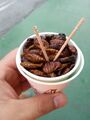 Beondegi

Advertise on WikiMD — 81,000+ full articles, ~900,000 total pages, ~250 million page views. Global reach, limited time promotional rates from $1/page/day. Learn more · View stats


Translate page: - East Asian
中文,
日本,
한국어,
South Asian
हिन्दी,
தமிழ்,
తెలుగు,
Urdu,
ಕನ್ನಡ,
Southeast Asian
Indonesian,
Vietnamese,
Thai,
မြန်မာဘာသာ,
বাংলা
European
español,
Deutsch,
français,
Greek,
português do Brasil,
polski,
română,
русский,
Nederlands,
norsk,
svenska,
suomi,
Italian
Middle Eastern & African
عربى,
Turkish,
Persian,
Hebrew,
Afrikaans,
isiZulu,
Kiswahili,
Other
Bulgarian,
Hungarian,
Czech,
Swedish,
മലയാളം,
मराठी,
ਪੰਜਾਬੀ,
ગુજરાતી,
Portuguese,
Ukrainian
About WikiMD • Contact • Disclaimer • Privacy • Copyright • Site statistics
Some content and images may originate from Wikimedia Commons or Wikipedia and remain subject to their stated licenses. Unless otherwise noted, eligible WikiMD content is available under CC BY-SA 4.0.
WikiMD Wellnesspedia — Free health & wellness information for patients, students, and health professionals.

