Macanese cuisine
Macanese cuisine is a unique blend of southern Chinese and Portuguese cuisines, with significant influences from Southeast Asia and the Lusophone world. Notable for its flavour blending culture, it reflects Macau's history as a cultural meeting point.
History[edit]
Macanese cuisine has its roots in the 16th century, when Macau became a Portuguese colony. The Portuguese brought ingredients and cooking techniques from their colonies in Africa, South America, and India, which were incorporated into the local Chinese cuisine.
Ingredients[edit]
The cuisine is based on a variety of ingredients including turmeric, coconut milk, and bacalhau (dried cod), which are not commonly used in southern Chinese cuisine. Other ingredients such as chili peppers, cinnamon, and paprika are also used, reflecting the influence of the Portuguese empire's global trade routes.
Dishes[edit]
Some of the most famous dishes in Macanese cuisine include Minchi, a minced meat dish with potatoes, and Pork chop bun, a sandwich that is a popular street food in Macau. African chicken is another well-known dish, made with chicken, coconut milk, and spicy piri-piri sauce.
Desserts[edit]
Macanese desserts often feature pastel de nata, the Portuguese egg tart, and serradura, a pudding made from whipped cream and crushed biscuits. Another popular dessert is almond biscuit, a type of cookie that is often served during Chinese New Year.
Beverages[edit]
Port wine is commonly served with meals, reflecting the Portuguese influence. In addition, a variety of Chinese teas are also popular.
See also[edit]
References[edit]
 | This article about Portuguese cuisine is a stub. You can help WikiMD by expanding the page. |
 | This article related to Chinese cuisine is a stub. You can help WikiMD by expanding the page. |

-
 African chicken, a spicy dish with African and Portuguese influences.
 -
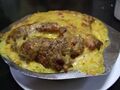 Galinha à Portuguesa, a dish of chicken with potatoes and vegetables in a coconut milk sauce.
 -
 Pastéis de nata, Portuguese egg tarts from Margaret's Café.
 -
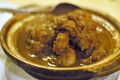 Pato de cabidela, a traditional Portuguese dish of duck cooked in its own blood.
 -
 Minchi, a Macanese dish made with minced meat and potatoes.
 -
 Pork chop bun, a popular Macanese street food.
 -
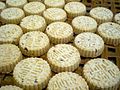 Almond biscuits from Koi Kei Bakery, a famous Macanese snack.
 -
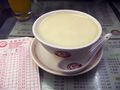 Ginger milk pudding, a dessert made with milk and ginger juice.


Medical Disclaimer: WikiMD is for informational purposes only and is not a substitute for professional medical advice. Content may be inaccurate or outdated and should not be used for diagnosis or treatment. Always consult your healthcare provider for medical decisions. Verify information with trusted sources such as CDC.gov and NIH.gov. By using this site, you agree that WikiMD is not liable for any outcomes related to its content. See full disclaimer.
Credits:Most images are courtesy of Wikimedia commons, and templates, categories Wikipedia, licensed under CC BY SA or similar.
Translate page: - East Asian
中文,
日本,
한국어,
South Asian
हिन्दी,
தமிழ்,
తెలుగు,
Urdu,
ಕನ್ನಡ,
Southeast Asian
Indonesian,
Vietnamese,
Thai,
မြန်မာဘာသာ,
বাংলা
European
español,
Deutsch,
français,
Greek,
português do Brasil,
polski,
română,
русский,
Nederlands,
norsk,
svenska,
suomi,
Italian
Middle Eastern & African
عربى,
Turkish,
Persian,
Hebrew,
Afrikaans,
isiZulu,
Kiswahili,
Other
Bulgarian,
Hungarian,
Czech,
Swedish,
മലയാളം,
मराठी,
ਪੰਜਾਬੀ,
ગુજરાતી,
Portuguese,
Ukrainian

