Lou mei
Lou Mei: A Popular Chinese Street Food[edit]
| Alternative names | |
| Type | |
| Course | Main course |
| Place of origin | China |
| Region or state | |
| Associated national cuisine | |
| Created by | |
| Invented | |
| Cooking time | minutes to minutes |
| Serving temperature | Hot |
| Main ingredients | Various meats and vegetables |
| Ingredients generally used | |
| Variations | |
| Food energy | kcal |
| Nutritional value | Protein: g, Fat: g, Carbohydrate: g |
| Glycemic index | |
| Similar dishes | |
| Other information | |
| Website | [ Official website] |
Lou Mei is a popular Chinese street food that originated in the Guangdong province of China. It is a flavorful and satisfying dish that consists of various meats and vegetables cooked in a savory sauce. Lou Mei is known for its rich flavors and the ability to customize the ingredients according to personal preferences.
History[edit]
Lou Mei has a long history in Chinese cuisine and is believed to have originated during the Qing Dynasty. It was initially created as a way to use leftover ingredients and reduce food waste. Over time, it gained popularity and became a staple street food in Guangdong and other regions of China.
Ingredients[edit]
The ingredients used in Lou Mei can vary depending on personal preferences and regional variations. However, some common ingredients include:
These ingredients are typically cooked in a flavorful sauce made from soy sauce, oyster sauce, garlic, ginger, and other seasonings.
Preparation[edit]
To prepare Lou Mei, the meats and vegetables are first marinated in the sauce for a period of time to absorb the flavors. Then, they are stir-fried or braised until cooked through. The dish is typically served hot and can be enjoyed on its own or with steamed rice or noodles.
Variations[edit]
There are several regional variations of Lou Mei, each with its own unique twist. For example:
- In Cantonese cuisine, Lou Mei is often made with a combination of meats such as pork, chicken, and beef, along with a variety of vegetables.
- In Sichuan cuisine, Lou Mei is known for its spicy flavors and the use of Sichuan peppercorns.
- In Hakka cuisine, Lou Mei is made with a focus on preserving the natural flavors of the ingredients, often using minimal seasoning.
Popularity[edit]
Lou Mei is a beloved street food in China and can be found in many cities and towns across the country. It is especially popular during festivals and celebrations, where vendors set up stalls to serve this delicious dish to locals and tourists alike.
See Also[edit]
References[edit]
-
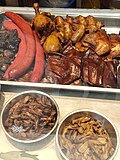 Lou mei at Master Stock Tak Kee Restaurant
 -
 Lou mei at Gueishan Market
 -
 Lou mei at Ngan Kee snack shop
 -
 Lou mei at Taiwan Night Market
 -
 Lou mei vendor at Raohe Street Night Market
 -
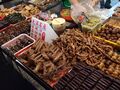 Lou mei in Taipei


Medical Disclaimer: WikiMD is for informational purposes only and is not a substitute for professional medical advice. Content may be inaccurate or outdated and should not be used for diagnosis or treatment. Always consult your healthcare provider for medical decisions. Verify information with trusted sources such as CDC.gov and NIH.gov. By using this site, you agree that WikiMD is not liable for any outcomes related to its content. See full disclaimer.
Credits:Most images are courtesy of Wikimedia commons, and templates, categories Wikipedia, licensed under CC BY SA or similar.
Translate page: - East Asian
中文,
日本,
한국어,
South Asian
हिन्दी,
தமிழ்,
తెలుగు,
Urdu,
ಕನ್ನಡ,
Southeast Asian
Indonesian,
Vietnamese,
Thai,
မြန်မာဘာသာ,
বাংলা
European
español,
Deutsch,
français,
Greek,
português do Brasil,
polski,
română,
русский,
Nederlands,
norsk,
svenska,
suomi,
Italian
Middle Eastern & African
عربى,
Turkish,
Persian,
Hebrew,
Afrikaans,
isiZulu,
Kiswahili,
Other
Bulgarian,
Hungarian,
Czech,
Swedish,
മലയാളം,
मराठी,
ਪੰਜਾਬੀ,
ગુજરાતી,
Portuguese,
Ukrainian

