Safflower: Difference between revisions
CSV import |
CSV import |
||
| Line 35: | Line 35: | ||
{{Vegetable oils}} | {{Vegetable oils}} | ||
{{medicine-stub}} | {{medicine-stub}} | ||
<gallery> | |||
File:Safflower.jpg|Safflower | |||
File:Illustration Carthamus tinctorius0.jpg|Illustration of Safflower | |||
File:Saffloweroutput.png|Safflower | |||
File:Carthamus tinctorius MHNT.BOT.2011.3.34.jpg|Carthamus tinctorius | |||
File:Carthamus tinctorius Sturm21.jpg|Carthamus tinctorius | |||
File:Tuerkischer safran.jpg|Turkish Saffron | |||
File:Safflower oil.jpg|Safflower Oil | |||
</gallery> | |||
Latest revision as of 01:46, 20 February 2025
Safflower (Carthamus tinctorius) is a highly branched, herbaceous, thistle-like annual plant. It is commercially cultivated for vegetable oil extracted from the seeds and was used by the early Spanish colonies along the Rio Grande as a substitute for saffron. Plants are 30 to 150 cm tall with globular flower heads having yellow, orange, or red flowers. Each branch will usually have from one to five flower heads containing 15 to 20 seeds per head. Safflower is native to arid environments having seasonal rain. It grows a deep taproot which enables it to thrive in such environments.
History[edit]
Safflower is one of humanity's oldest crops. Chemical analysis of ancient Egyptian textiles dated to the Twelfth Dynasty identified dyes made from safflower, and garlands made from safflowers were found in the tomb of the pharaoh Tutankhamun.
Cultivation and Uses[edit]
Traditionally, the crop was grown for its seeds, and used for coloring and flavoring foods, in medicines, and making red (carthamin) and yellow dyes, especially before cheaper aniline dyes became available. For the last fifty years or so, the plant has been cultivated mainly for the vegetable oil extracted from its seeds.
Safflower Oil[edit]
Safflower oil is flavorless and colorless, and nutritionally similar to sunflower oil. It is used mainly in cosmetics and as a cooking oil, in salad dressing, and for the production of margarine. It may also be taken as a nutritional supplement.
Health Benefits[edit]
Safflower oil is not a source of omega-3 fatty acids, but it does contain omega-6 fatty acids. These are considered a beneficial type of fat that can help to reduce inflammation and lower the risk of heart disease.
See Also[edit]
References[edit]
<references />
| Edible Seeds | ||||||||
|---|---|---|---|---|---|---|---|---|
This edible seeds related article is a stub.
|
| Plant oils |
|---|
 |
| Types |
| Uses |
| Components |

-
 Safflower
 -
 Illustration of Safflower
 -
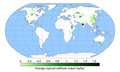 Safflower
 -
 Carthamus tinctorius
 -
 Carthamus tinctorius
 -
 Turkish Saffron
 -
 Safflower Oil


