Types of plant oils
Plant oils or vegetable oils are oils derived from plant sources, as opposed to animal fats or petroleum. There are three primary types of plant oils: essential oils, fixed (or carrier) oils, and infused oils. Each type has unique characteristics and uses, ranging from culinary applications to skincare and aromatherapy.
Essential Oils[edit]
Essential oils are volatile, aromatic oils obtained from plants. They are typically extracted through steam distillation, but can also be obtained through cold pressing. Essential oils are used in perfumery, aromatherapy, and as flavorings in food and drink. Some common examples include lavender oil, peppermint oil, and lemon oil.
Fixed Oils[edit]
Fixed oils, also known as carrier oils, are non-volatile oils that are extracted from the fatty portions of plants, usually seeds, nuts, or kernels. Unlike essential oils, fixed oils do not evaporate and have a more neutral scent. They are often used in cooking, skincare products, and for oil painting. Examples of fixed oils include olive oil, coconut oil, and sunflower oil.
Infused Oils[edit]
Infused oils are created by steeping herbs, flowers, or other plant materials in a carrier oil to extract the plant's beneficial properties. The resulting oil carries the flavor, scent, and beneficial properties of the plant material. Infused oils are often used in cooking, skincare, and herbal medicine. Examples include garlic infused oil and calendula infused oil.
Uses of Plant Oils[edit]
Plant oils have a wide range of uses, from culinary to industrial applications. In cooking, they are used for frying, baking, and as a dressing for salads. In skincare, they are used as moisturizers, cleansers, and in the formulation of various cosmetic products. In industry, plant oils are used in the production of biofuels, paints, and lubricants.
Health Implications[edit]
The health implications of plant oils vary depending on the type of oil and its use. Some, like olive oil and canola oil, are high in monounsaturated fats and are considered heart-healthy. Others, like coconut oil, are high in saturated fats and may contribute to heart disease if consumed in excess. Essential oils, while beneficial in many ways, can be toxic if ingested and should be used with caution.
See Also[edit]

-
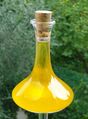 Olive oil from Oneglia


Medical Disclaimer: WikiMD is for informational purposes only and is not a substitute for professional medical advice. Content may be inaccurate or outdated and should not be used for diagnosis or treatment. Always consult your healthcare provider for medical decisions. Verify information with trusted sources such as CDC.gov and NIH.gov. By using this site, you agree that WikiMD is not liable for any outcomes related to its content. See full disclaimer.
Credits:Most images are courtesy of Wikimedia commons, and templates, categories Wikipedia, licensed under CC BY SA or similar.
Translate page: - East Asian
中文,
日本,
한국어,
South Asian
हिन्दी,
தமிழ்,
తెలుగు,
Urdu,
ಕನ್ನಡ,
Southeast Asian
Indonesian,
Vietnamese,
Thai,
မြန်မာဘာသာ,
বাংলা
European
español,
Deutsch,
français,
Greek,
português do Brasil,
polski,
română,
русский,
Nederlands,
norsk,
svenska,
suomi,
Italian
Middle Eastern & African
عربى,
Turkish,
Persian,
Hebrew,
Afrikaans,
isiZulu,
Kiswahili,
Other
Bulgarian,
Hungarian,
Czech,
Swedish,
മലയാളം,
मराठी,
ਪੰਜਾਬੀ,
ગુજરાતી,
Portuguese,
Ukrainian

