Chinese herbology
Chinese Herbology is a traditional practice originating from Ancient China that involves the use of herbs for medicinal purposes. This practice is a significant part of Traditional Chinese Medicine (TCM), which also includes acupuncture, dietary therapy, and exercise in the form of qigong.
History[edit]
Chinese herbology has a history of over 2000 years and is deeply rooted in the Chinese culture. The earliest record of Chinese herbology can be traced back to the Shennong Bencao Jing, a Chinese book on agriculture and medicinal plants.
Principles[edit]
The principles of Chinese herbology are based on the concepts of Yin and Yang, the Five Elements, and the Zang-Fu theory. These principles guide the selection and combination of herbs to achieve balance in the body.
Herbs[edit]
In Chinese herbology, over 3000 different types of herbs are used. These herbs are classified into three categories: superior, middle, and inferior. Superior herbs are non-toxic and can be consumed in large amounts over a long period. Middle herbs are slightly toxic and are used to treat diseases. Inferior herbs are highly toxic and are used sparingly for severe conditions.
Preparation and Use[edit]
Chinese herbs are typically prepared in a decoction, a concentrated herbal tea. They can also be used in powders, pills, tinctures, and external applications such as lotions, compresses, and baths.
Safety and Regulation[edit]
While Chinese herbology has been practiced for thousands of years, it is not without risks. Some herbs can interact with other medications, and some can be toxic if used improperly. In many countries, Chinese herbs are regulated as dietary supplements, which means they are not subject to the same rigorous testing as pharmaceutical drugs.
See Also[edit]

This WikiMD article can only be edited by registered and verified editors. You can log in or register.
-
 Traditional medicine market in Xi'an
 -
 Chinese pharmacopoeia
 -
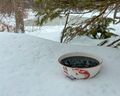 Chinese herbal decoction on snow
 -
 Wuxing diagram
 -
 Seahorse skeleton
 -
 Envoy herbs in Traditional Chinese Medicine
.JPG)

_on_snow.jpg)


_in_Traditional_Chinese_Medicine.jpg)
Advertise on WikiMD — 81,000+ full articles, ~900,000 total pages, ~250 million page views. Global reach, limited time promotional rates from $1/page/day. Learn more · View stats

Medical Disclaimer: WikiMD is for informational purposes only and is not a substitute for professional medical advice. Content may be inaccurate or outdated and should not be used for diagnosis or treatment. Always consult your healthcare provider for medical decisions. Verify information with trusted sources such as CDC.gov and NIH.gov. By using this site, you agree that WikiMD is not liable for any outcomes related to its content. See full disclaimer.
Credits:Most images are courtesy of Wikimedia commons, and templates, categories Wikipedia, licensed under CC BY SA or similar.
Translate page: - East Asian
中文,
日本,
한국어,
South Asian
हिन्दी,
தமிழ்,
తెలుగు,
Urdu,
ಕನ್ನಡ,
Southeast Asian
Indonesian,
Vietnamese,
Thai,
မြန်မာဘာသာ,
বাংলা
European
español,
Deutsch,
français,
Greek,
português do Brasil,
polski,
română,
русский,
Nederlands,
norsk,
svenska,
suomi,
Italian
Middle Eastern & African
عربى,
Turkish,
Persian,
Hebrew,
Afrikaans,
isiZulu,
Kiswahili,
Other
Bulgarian,
Hungarian,
Czech,
Swedish,
മലയാളം,
मराठी,
ਪੰਜਾਬੀ,
ગુજરાતી,
Portuguese,
Ukrainian

