Tempering (spices)
Tempering (spices) is a cooking technique used in various cuisines, particularly in Indian cuisine, Pakistani cuisine, and Bangladeshi cuisine. The process involves heating spices in hot oil or ghee (clarified butter) to release their essential oils and enhance their flavors. This technique is also known as tadka, chaunk, bagar, or phoron in different regions of the Indian subcontinent.
Process[edit]
The process of tempering spices begins with heating oil or ghee in a pan. Once the oil is hot, whole or ground spices are added. The heat causes the spices to release their essential oils, which infuse the oil with flavor. This flavored oil is then used as a base for dishes, or it can be drizzled over finished dishes to add a burst of flavor.
Commonly used spices in tempering include cumin, mustard seeds, fenugreek seeds, asafetida, curry leaves, and dried red chilies. The choice of spices varies depending on the dish being prepared and regional preferences.
Regional Variations[edit]
While tempering is a common technique in Indian, Pakistani, and Bangladeshi cuisines, it is also used in other cuisines around the world. For example, in Thai cuisine, a similar technique known as khrueang kaeng is used, where a paste of spices and herbs is fried in coconut cream.
In Italian cuisine, a technique known as soffritto involves gently frying onions, garlic, and celery in olive oil, which serves a similar purpose of infusing the oil with flavor.
Health Benefits[edit]
Tempering spices not only enhances their flavor but also increases their health benefits. The heat helps to release the essential oils in the spices, which contain various beneficial compounds. For example, cumin is known for its digestive properties, while mustard seeds are rich in antioxidants.
See Also[edit]
This cooking technique related article is a stub. You can help WikiMD by expanding it.
-
Chaunk photo
-
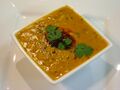 Tadka Dal


Medical Disclaimer: WikiMD is for informational purposes only and is not a substitute for professional medical advice. Content may be inaccurate or outdated and should not be used for diagnosis or treatment. Always consult your healthcare provider for medical decisions. Verify information with trusted sources such as CDC.gov and NIH.gov. By using this site, you agree that WikiMD is not liable for any outcomes related to its content. See full disclaimer.
Credits:Most images are courtesy of Wikimedia commons, and templates, categories Wikipedia, licensed under CC BY SA or similar.
Translate page: - East Asian
中文,
日本,
한국어,
South Asian
हिन्दी,
தமிழ்,
తెలుగు,
Urdu,
ಕನ್ನಡ,
Southeast Asian
Indonesian,
Vietnamese,
Thai,
မြန်မာဘာသာ,
বাংলা
European
español,
Deutsch,
français,
Greek,
português do Brasil,
polski,
română,
русский,
Nederlands,
norsk,
svenska,
suomi,
Italian
Middle Eastern & African
عربى,
Turkish,
Persian,
Hebrew,
Afrikaans,
isiZulu,
Kiswahili,
Other
Bulgarian,
Hungarian,
Czech,
Swedish,
മലയാളം,
मराठी,
ਪੰਜਾਬੀ,
ગુજરાતી,
Portuguese,
Ukrainian


