Mastic (plant resin)
Mastic is a resin obtained from the Pistacia lentiscus tree, also known as the mastic tree. This tree is a member of the Anacardiaceae family and is native to the Mediterranean region. The resin is harvested by making small cuts in the bark of the tree, which causes the resin to seep out and harden into droplets known as "tears".
History[edit]
The use of mastic resin dates back to ancient times. It was used by the Ancient Greeks and Ancient Romans for a variety of purposes, including as a chewing gum, a breath freshener, and a treatment for digestive problems. The resin was also used in the production of cosmetics and perfumes.
Production[edit]
Today, mastic resin is primarily produced on the Greek island of Chios. The production process is labor-intensive and requires a great deal of skill. The resin is harvested during the summer months, when the heat causes the resin to flow more freely. The "tears" are collected by hand and then cleaned and sorted before being packaged for sale.
Uses[edit]
Mastic resin has a wide range of uses. In addition to its traditional uses as a chewing gum and a medicinal remedy, it is also used in the production of varnishes and adhesives. In the culinary world, mastic is used as a flavoring in a variety of dishes, including pastries, ice cream, and liqueurs. It is also used in the production of Mastiha, a Greek liqueur.
Health Benefits[edit]
Mastic resin has been used for centuries for its medicinal properties. It is believed to have antimicrobial, anti-inflammatory, and antioxidant properties. Some studies have suggested that mastic can help to reduce cholesterol levels and may have potential benefits for people with stomach ulcers.
See Also[edit]

-
 Mastic (plant resin)
 -
 Mastic (plant resin)
 -
 Mastic (plant resin)
 -
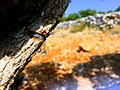 Mastic (plant resin)
 -
 Food with mastic


Medical Disclaimer: WikiMD is for informational purposes only and is not a substitute for professional medical advice. Content may be inaccurate or outdated and should not be used for diagnosis or treatment. Always consult your healthcare provider for medical decisions. Verify information with trusted sources such as CDC.gov and NIH.gov. By using this site, you agree that WikiMD is not liable for any outcomes related to its content. See full disclaimer.
Credits:Most images are courtesy of Wikimedia commons, and templates, categories Wikipedia, licensed under CC BY SA or similar.
Translate page: - East Asian
中文,
日本,
한국어,
South Asian
हिन्दी,
தமிழ்,
తెలుగు,
Urdu,
ಕನ್ನಡ,
Southeast Asian
Indonesian,
Vietnamese,
Thai,
မြန်မာဘာသာ,
বাংলা
European
español,
Deutsch,
français,
Greek,
português do Brasil,
polski,
română,
русский,
Nederlands,
norsk,
svenska,
suomi,
Italian
Middle Eastern & African
عربى,
Turkish,
Persian,
Hebrew,
Afrikaans,
isiZulu,
Kiswahili,
Other
Bulgarian,
Hungarian,
Czech,
Swedish,
മലയാളം,
मराठी,
ਪੰਜਾਬੀ,
ગુજરાતી,
Portuguese,
Ukrainian

