Saint Lucia: Difference between revisions
CSV import |
CSV import Tags: mobile edit mobile web edit |
||
| Line 32: | Line 32: | ||
{{Caribbean-stub}} | {{Caribbean-stub}} | ||
{{Saint Lucia-stub}} | {{Saint Lucia-stub}} | ||
<gallery> | |||
File:Flag_of_Saint_Lucia_(1939–1967).svg|Flag of Saint Lucia (1939–1967) | |||
File:Saint_Lucia_geography_map_en.png|Saint Lucia geography map | |||
File:USGS_Saint_Lucia_geologic_map.png|USGS Saint Lucia geologic map | |||
File:Qualibou_Caldera_tomography.png|Qualibou Caldera tomography | |||
File:King_Charles_III_(July_2023).jpg|King Charles III (July 2023) | |||
File:Errol_Charles_Sep_2022.jpg|Errol Charles Sep 2022 | |||
File:Philip_J_Pierre_Christmas_2020_(cropped).png|Philip J Pierre Christmas 2020 | |||
File:Saint_Lucia,_administrative_divisions_-_fr_-_monochrome.svg|Saint Lucia administrative divisions | |||
File:Saint_Lucia_electricity_production.svg|Saint Lucia electricity production | |||
File:At_the_top_of_Pigeon_Island.jpg|At the top of Pigeon Island | |||
File:Beausejour_Stadium_Cricket_St_Lucia.jpg|Beausejour Stadium Cricket St Lucia | |||
</gallery> | |||
Latest revision as of 21:16, 23 February 2025
Saint Lucia is an island country in the Caribbean Sea. It is part of the Lesser Antilles, located north/northeast of the island of Saint Vincent, northwest of Barbados and south of Martinique. The country covers a land area of 617 km2 and reported a population of 165,595 in the 2010 census. Its capital is Castries, where about one third of the population lives.
History[edit]
Saint Lucia was first inhabited by the Arawak people around 200 AD. The Carib people replaced the Arawaks by 800 AD. The island was not settled by Europeans until the 1550s, when it was claimed by the French. However, the British also made attempts to colonize the island, leading to centuries of conflict. Saint Lucia was finally granted independence on February 22, 1979.
Geography[edit]
Saint Lucia is known for its diverse landscape. The island's highest point is Mount Gimie, at 950 meters above sea level. A notable feature of Saint Lucia is the Pitons, a pair of volcanic plugs located on the island's southwest coast.
Economy[edit]
The economy of Saint Lucia relies primarily on tourism, banana production, and light manufacturing industries such as clothing. The island's currency is the Eastern Caribbean Dollar.
Culture[edit]
Saint Lucia's culture is a blend of French, British, and African influences. The official language is English, but a French-based Creole is commonly spoken. The island is known for its annual Saint Lucia Jazz Festival.
See also[edit]
| Commonwealth realms and dominions |
|---|
|
: 1 Annexed by Canada in 1949
|
| Island countries | ||||||||||
|---|---|---|---|---|---|---|---|---|---|---|
This island country related article is a stub.
|
| Saint Lucia topics | ||||||||||
|---|---|---|---|---|---|---|---|---|---|---|
This Saint Lucia related article is a stub.
|


This article is a Saint Lucia-related stub. You can help WikiMD by expanding it!
-
 Flag of Saint Lucia (1939–1967)
 -
 Saint Lucia geography map
 -
 USGS Saint Lucia geologic map
 -
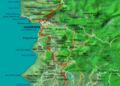 Qualibou Caldera tomography
 -
 King Charles III (July 2023)
 -
 Errol Charles Sep 2022
 -
 Philip J Pierre Christmas 2020
 -
 Saint Lucia administrative divisions
 -
 Saint Lucia electricity production
 -
 At the top of Pigeon Island
 -
 Beausejour Stadium Cricket St Lucia
.svg)


.jpg)

.png)


