Dominican Republic
Dominican Republic is a country located in the Caribbean region. It is the second largest nation in the Antilles by area and population. The Dominican Republic shares the island of Hispaniola with the nation of Haiti. The country is known for its diverse geography, which includes rainforests, savannahs, highlands, and deserts. The capital city is Santo Domingo.
History[edit]
The Dominican Republic was inhabited by the Taíno people prior to the arrival of Christopher Columbus in 1492. The country gained independence from Spain in 1821, but was then occupied by Haiti for 22 years. The Dominican Republic regained its independence in 1844.
Healthcare in the Dominican Republic[edit]
Healthcare in the Dominican Republic is provided through a combination of public and private providers. The public healthcare system is managed by the Ministry of Public Health, which provides services through a network of hospitals and clinics throughout the country. Private healthcare providers also operate in the Dominican Republic, offering a range of services from primary care to specialized treatments.
Diseases and Conditions[edit]
The most common diseases in the Dominican Republic are cardiovascular diseases, followed by infectious and parasitic diseases. Other common conditions include respiratory diseases, diabetes, and cancer.
See Also[edit]
- Healthcare in the Dominican Republic
- History of the Dominican Republic
- Geography of the Dominican Republic
References[edit]

This WikiMD article can only be edited by registered and verified editors. You can log in or register.
-
Dominican Republic National Anthem
-
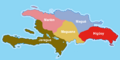 Copia de Cacicazgos de la Hispaniola
 -
 Pictografia igneri
 -
 Taíno pictographs Cuevas de las Maravillas
 -
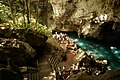 Los Tres Ojos
 -
 Treaty of Aranjuez English
 -
 Flag of the Dominican Republic (up to 1844)
 -
 Santana
 -
 Buenaventura Báez
 -
 Jura del gobernador y capitán general de Santo Domingo, don Pedro Santana (Museo del Prado)
 -
 Puerto Plata Cathedrale
 -
 Monumento a los Héroes de la Restauración 2013


.svg)


.jpg)


Medical Disclaimer: WikiMD is for informational purposes only and is not a substitute for professional medical advice. Content may be inaccurate or outdated and should not be used for diagnosis or treatment. Always consult your healthcare provider for medical decisions. Verify information with trusted sources such as CDC.gov and NIH.gov. By using this site, you agree that WikiMD is not liable for any outcomes related to its content. See full disclaimer.
Credits:Most images are courtesy of Wikimedia commons, and templates, categories Wikipedia, licensed under CC BY SA or similar.
Translate page: - East Asian
中文,
日本,
한국어,
South Asian
हिन्दी,
தமிழ்,
తెలుగు,
Urdu,
ಕನ್ನಡ,
Southeast Asian
Indonesian,
Vietnamese,
Thai,
မြန်မာဘာသာ,
বাংলা
European
español,
Deutsch,
français,
Greek,
português do Brasil,
polski,
română,
русский,
Nederlands,
norsk,
svenska,
suomi,
Italian
Middle Eastern & African
عربى,
Turkish,
Persian,
Hebrew,
Afrikaans,
isiZulu,
Kiswahili,
Other
Bulgarian,
Hungarian,
Czech,
Swedish,
മലയാളം,
मराठी,
ਪੰਜਾਬੀ,
ગુજરાતી,
Portuguese,
Ukrainian

