Seoul: Difference between revisions
CSV import |
CSV import |
||
| Line 33: | Line 33: | ||
{{Geography-stub}} | {{Geography-stub}} | ||
{{SouthKorea-stub}} | {{SouthKorea-stub}} | ||
== Seoul == | |||
<gallery> | |||
File:Seoul_(175734251)_(cropped).jpg|Seoul (175734251) (cropped) | |||
File:덕수궁의_가을.jpg|덕수궁의 가을 | |||
File:Republic_of_Korea_capitol.jpg|Republic of Korea capitol | |||
File:Lotte_World_day_view_2.jpg|Lotte World day view 2 | |||
File:Gyeongbokgung_Palace_5.jpg|Gyeongbokgung Palace 5 | |||
File:Seoul_at_night_(cropped).jpg|Seoul at night (cropped) | |||
File:Amsadong_IMG_2081.jpg|Amsadong IMG 2081 | |||
File:한양도성낙산구간.jpg|한양도성낙산구간 | |||
File:Gyeongjoobudo.jpg|Gyeongjoobudo | |||
File:Chongno1905.jpg|Chongno1905 | |||
File:L’Indépendance_de_la_Corée_et_la_Paix-02.jpg|L’Indépendance de la Corée et la Paix-02 | |||
File:Seoul_Station_in_1945.8.15.jpg|Seoul Station in 1945.8.15 | |||
</gallery> | |||
Latest revision as of 21:37, 23 February 2025
Seoul is the capital city and largest metropolis of South Korea. It is located in the northwest part of the country, situated on the Han River. With a population of over 9.7 million people, Seoul is one of the most populous cities in the world.
History[edit]
Seoul has a rich and complex history that dates back over 2,000 years. It was founded in 18 BCE by the people of the Baekje Kingdom, one of the Three Kingdoms of Korea. The city was originally named Wiryeseong. In the 14th century, the city became the capital of the Joseon Dynasty, and its name was changed to Hanyang, and later to Hanseong. The city was renamed Seoul during the Korean Empire period in the late 19th and early 20th centuries.
Geography[edit]
Seoul is located in the northwest part of South Korea, near the border with North Korea. The city is divided by the Han River, which flows through the center of the city. Seoul is surrounded by a series of mountains, the highest of which is Mount Bukhan, a popular spot for hiking and outdoor activities.
Economy[edit]
Seoul is the economic center of South Korea. It is home to many multinational corporations and global brands, including Samsung, Hyundai, and LG Electronics. The city's economy is diverse, with major industries including technology, finance, manufacturing, and retail.
Culture[edit]
Seoul is a hub of Korean culture. It is home to many cultural landmarks, including the Gyeongbokgung Palace, Changdeokgung Palace, and Jongmyo Shrine, which are UNESCO World Heritage Sites. The city also has a vibrant arts scene, with a multitude of museums, galleries, and music venues.
Education[edit]
Seoul is a major center for education in South Korea. It is home to several of the country's top universities, including Seoul National University, Yonsei University, and Korea University.
Transportation[edit]
Seoul has a highly developed transportation infrastructure. The Seoul Metropolitan Subway is one of the most extensive and efficient subway systems in the world. The city is also served by two international airports, Incheon International Airport and Gimpo International Airport.
See also[edit]
| Korea topics | ||||||||||
|---|---|---|---|---|---|---|---|---|---|---|
This Korea-related article is a stub. You can help WikiMD by expanding it.
|
| Topics by Asian country | ||||||
|---|---|---|---|---|---|---|
|
| Capital cities of Asia | ||||||||||
|---|---|---|---|---|---|---|---|---|---|---|
|


This article is a South Korea-related stub. You can help WikiMD by expanding it!
Seoul[edit]
-
 Seoul (175734251) (cropped)
 -
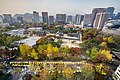 덕수궁의 가을
 -
 Republic of Korea capitol
 -
 Lotte World day view 2
 -
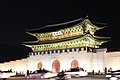 Gyeongbokgung Palace 5
 -
 Seoul at night (cropped)
 -
 Amsadong IMG 2081
 -
 한양도성낙산구간
 -
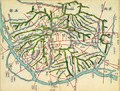 Gyeongjoobudo
 -
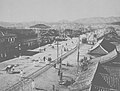 Chongno1905
 -
 L’Indépendance de la Corée et la Paix-02
 -
 Seoul Station in 1945.8.15
_(cropped).jpg)


.jpg)


