Allyltestosterone
-
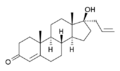 Structure of 17a-allyltestosterone

Allyltestosterone[edit]
Allyltestosterone is a synthetic androgen and anabolic steroid (AAS) that is structurally related to testosterone. It is characterized by the presence of an allyl group at the C-17_ position of the steroid nucleus. This compound is of interest in the field of medicinal chemistry and endocrinology due to its potential effects on androgen receptors and its anabolic properties.
Chemical Structure and Properties[edit]
Allyltestosterone, also known by its chemical name 17_-allyltestosterone, is a derivative of testosterone. The addition of the allyl group at the 17_ position distinguishes it from other testosterone derivatives. This modification can influence the compound's binding affinity to androgen receptors and its metabolic stability.
The molecular formula of allyltestosterone is C22H32O2, and it has a molecular weight of approximately 328.49 g/mol. The presence of the allyl group may affect the compound's solubility and its interaction with biological membranes.
Pharmacology[edit]
As an androgen and anabolic steroid, allyltestosterone is expected to interact with the androgen receptor, a type of nuclear receptor that is activated by binding to testosterone or other androgens. Upon activation, the receptor-ligand complex translocates to the cell nucleus, where it can influence the expression of specific genes involved in the development and maintenance of male characteristics and muscle growth.
The anabolic effects of allyltestosterone may include increased protein synthesis, muscle mass, and strength. However, the specific pharmacokinetics and pharmacodynamics of allyltestosterone have not been extensively studied, and its clinical applications remain largely theoretical.
Potential Applications[edit]
While allyltestosterone itself is not used clinically, its study can provide insights into the development of new anabolic steroids with improved efficacy and safety profiles. Researchers may explore its potential use in conditions characterized by muscle wasting or androgen deficiency.
Safety and Side Effects[edit]
As with other anabolic steroids, the use of allyltestosterone could potentially lead to side effects associated with androgenic activity. These may include acne, hirsutism, voice deepening, and alterations in lipid profile. Long-term use of anabolic steroids can also affect the cardiovascular system, liver function, and endocrine system.
Related Pages[edit]

Medical Disclaimer: WikiMD is for informational purposes only and is not a substitute for professional medical advice. Content may be inaccurate or outdated and should not be used for diagnosis or treatment. Always consult your healthcare provider for medical decisions. Verify information with trusted sources such as CDC.gov and NIH.gov. By using this site, you agree that WikiMD is not liable for any outcomes related to its content. See full disclaimer.
Credits:Most images are courtesy of Wikimedia commons, and templates, categories Wikipedia, licensed under CC BY SA or similar.
Translate page: - East Asian
中文,
日本,
한국어,
South Asian
हिन्दी,
தமிழ்,
తెలుగు,
Urdu,
ಕನ್ನಡ,
Southeast Asian
Indonesian,
Vietnamese,
Thai,
မြန်မာဘာသာ,
বাংলা
European
español,
Deutsch,
français,
Greek,
português do Brasil,
polski,
română,
русский,
Nederlands,
norsk,
svenska,
suomi,
Italian
Middle Eastern & African
عربى,
Turkish,
Persian,
Hebrew,
Afrikaans,
isiZulu,
Kiswahili,
Other
Bulgarian,
Hungarian,
Czech,
Swedish,
മലയാളം,
मराठी,
ਪੰਜਾਬੀ,
ગુજરાતી,
Portuguese,
Ukrainian

