Cholangiocarcinoma
Bile duct adenocarcinoma
| Cholangiocarcinoma | |
|---|---|
| Cholangiocarcinoma - very high mag.jpg | |
| Micrograph of an intrahepatic cholangiocarcinoma (right of image) adjacent to normal liver cells (left of image). H&E stain. | |
| Synonyms | Bile duct cancer, cancer of the bile duct |
| Pronunciation | koh-LAN-jee-oh-KAR-sih-NOH-muh |
| Specialty | Oncology |
| Symptoms | Abdominal pain, yellowish skin, weight loss, generalized itching, fever
|
| Usual onset | 70 years old
|
| Types | Intrahepatic, perihilar, distal
|
| Risk factors | Primary sclerosing cholangitis, ulcerative colitis, infection with certain liver flukes, some congenital liver malformations |
| Diagnosis | Confirmed by examination of the tumor under a microscope
|
| Treatment | Surgical resection, chemotherapy, radiation therapy, stenting procedures, liver transplantation
|
| Prognosis | Generally poor |
| Frequency | 1–2 people per 100,000 per year (Western world)
|
Cholangiocarcinoma, colloquially known as bile duct cancer, is a rare but serious form of cancer that arises in the bile ducts. These ducts are a series of intricate channels responsible for transporting bile – a fluid aiding in the digestion and absorption of fats – from the liver to the gallbladder and intestines.
Anatomy: Bile Ducts[edit]
The bile duct system consists of a series of small tubes that transport bile from the liver to the gallbladder and then into the small intestine. This complex network comprises intrahepatic bile ducts (within the liver), extrahepatic bile ducts (outside the liver), and the common bile duct.
Types of Cholangiocarcinoma[edit]
Cholangiocarcinomas are classified based on their location in the bile duct system:
- Intrahepatic Cholangiocarcinoma: These originate in the small bile duct branches inside the liver.
- Perihilar (or Klatskin tumor) Cholangiocarcinoma: These form at the hilum, where the left and right hepatic ducts have joined and are leaving the liver.
- Distal Cholangiocarcinoma: These occur further down the bile duct, closer to the small intestine.
Risk Factors[edit]
Several conditions are linked to an increased risk of developing cholangiocarcinoma:
- Primary sclerosing cholangitis: An inflammatory disease of the bile ducts that can lead to scarring and narrowing.
- Ulcerative colitis: A chronic condition characterized by inflammation of the large intestine (colon and rectum).
- Cirrhosis: Scarring of the liver due to various causes such as alcoholism or chronic hepatitis.
- Hepatitis B and Hepatitis C: Viral infections that can cause chronic liver disease and cirrhosis.
- Parasitic infection: Particularly infection with liver flukes which are common in certain parts of Asia.
- Congenital liver malformations: Such as Caroli's syndrome and choledochal cysts.
Signs and Symptoms[edit]
The clinical presentation of cholangiocarcinoma can be quite variable, and symptoms typically do not appear until the disease has progressed significantly. Common symptoms may include:
- Jaundice (yellowing of the skin and eyes)
- Abdominal pain, particularly in the upper right quadrant
- Unexplained weight loss
- Loss of appetite
- Fever
- Itching
- Dark urine and pale stools
Investigations[edit]
Diagnosis of cholangiocarcinoma often involves a combination of blood tests, imaging studies, and, in some cases, biopsy. Liver function tests can detect signs of liver damage or disease, while tumor markers can help identify potential cancer. Imaging studies such as ultrasound, CT, MRI, and ERCP (endoscopic retrograde cholangiopancreatography) can help visualize the bile ducts and detect any abnormalities. A biopsy may be required to confirm the diagnosis.
Staging[edit]
Staging is an important process that determines the extent of cancer spread. This information can help guide treatment decisions and prognosis. The TNM (Tumor, Nodes, Metastasis) system is commonly used in the staging of cholangiocarcinoma.
Prognosis and Treatment[edit]
The prognosis of cholangiocarcinoma is generally poor due to late diagnosis. Treatment depends on the stage and location of the cancer and can include surgery (if the tumor is localized and the patient is fit for surgery), chemotherapy, radiation therapy, and palliative care.

This WikiMD article can only be edited by registered and verified editors. You can log in or register.
| Digestive system neoplasia | ||||||||||||||||||||||||
|---|---|---|---|---|---|---|---|---|---|---|---|---|---|---|---|---|---|---|---|---|---|---|---|---|
|
| Glandular and epithelial cancer | ||||||||||||||||||||||||
|---|---|---|---|---|---|---|---|---|---|---|---|---|---|---|---|---|---|---|---|---|---|---|---|---|
|
-
 Cholangiocarcinoma
 -
 Jaundice of the sclerotic
 -
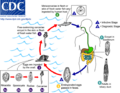 Clonorchis sinensis Life Cycle
 -
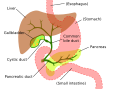 Digestive system showing bile duct
 -
 Cholangiocarcinoma
 -
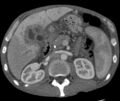 Cholangiocarcinoma
 -
 Cholangiocarcinoma
 -
 Cholangiocarcinoma
 -
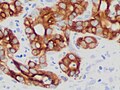 Immunohistochemistry for CK19 in metastatic cholangiocarcinoma to the liver
 -
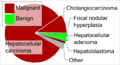 Liver tumor types in adults by relative incidence


Sponsored Health Resource

W8MD Weight Loss, Sleep & MedSpa
Looking for physician-supervised weight loss, semaglutide, tirzepatide, or GLP-1 receptor agonist options? W8MD helps eligible patients in New York City, Brooklyn, New Jersey, Connecticut, Pennsylvania, Delaware, and greater Philadelphia with medical weight loss, sleep medicine, and long-term maintenance support.
GLP-1 specials: Affordable GLP-1 injections NYC and Philadelphia starting from $29.99/week and up for semaglutide with insurance accepted for qualifying visits, and $45/week and up for tirzepatide with insurance accepted for qualifying visits. Self-pay options start from $59.99/week and up for semaglutide and $69.99/week and up for tirzepatide.
Medical weight loss NYC | Affordable GLP-1 injections NYC | Budget GLP-1 weight loss shots Philadelphia | New Jersey medical weight loss | NYC medical weight loss | Philadelphia medical weight loss | Sleep clinic NYC | W8MD's Philadelphia GLP-1 doctor | Weight loss prescriptions NYC
Book a W8MD appointment · View GLP-1 specials
Paid promotional message. Eligibility, pricing, insurance coverage, medication availability, and results vary. Medical evaluation required.

Medical Disclaimer: WikiMD is for informational purposes only and is not a substitute for professional medical advice. Content may be inaccurate or outdated and should not be used for diagnosis or treatment. Always consult your healthcare provider for medical decisions. Verify information with trusted sources such as CDC.gov and NIH.gov. By using this site, you agree that WikiMD is not liable for any outcomes related to its content. See full disclaimer.
Credits:Most images are courtesy of Wikimedia commons, and templates, categories Wikipedia, licensed under CC BY SA or similar.
Translate page: - East Asian
中文,
日本,
한국어,
South Asian
हिन्दी,
தமிழ்,
తెలుగు,
Urdu,
ಕನ್ನಡ,
Southeast Asian
Indonesian,
Vietnamese,
Thai,
မြန်မာဘာသာ,
বাংলা
European
español,
Deutsch,
français,
Greek,
português do Brasil,
polski,
română,
русский,
Nederlands,
norsk,
svenska,
suomi,
Italian
Middle Eastern & African
عربى,
Turkish,
Persian,
Hebrew,
Afrikaans,
isiZulu,
Kiswahili,
Other
Bulgarian,
Hungarian,
Czech,
Swedish,
മലയാളം,
मराठी,
ਪੰਜਾਬੀ,
ગુજરાતી,
Portuguese,
Ukrainian

