Rhabdomyosarcoma

Prab R. Tumpati, MD — Editor-in-Chief, WikiMD Medical Encyclopedia
Internal medicine • Obesity medicine • Sleep medicine
Professional affiliations: Founder of WikiMD and W8MD Weight Loss, Sleep & MedSpa.
Biography, credentials and affiliations • Editorial policy • Disclosure policy
| Rhabdomyosarcoma | |
|---|---|
 | |
| Synonyms | N/A |
| Pronounce | N/A |
| Specialty | N/A |
| Symptoms | Swelling, pain, bleeding |
| Complications | Metastasis, organ dysfunction |
| Onset | Most common in children |
| Duration | Variable |
| Types | Embryonal rhabdomyosarcoma, Alveolar rhabdomyosarcoma, Pleomorphic rhabdomyosarcoma |
| Causes | Genetic mutations |
| Risks | Li-Fraumeni syndrome, Neurofibromatosis type I, Costello syndrome |
| Diagnosis | Biopsy, imaging studies |
| Differential diagnosis | Ewing sarcoma, Lymphoma, Neuroblastoma |
| Prevention | N/A |
| Treatment | Surgery, chemotherapy, radiation therapy |
| Medication | N/A |
| Prognosis | Depends on type and stage |
| Frequency | Rare |
| Deaths | N/A |
Rhabdomyosarcoma tumors arise from a cell called a "rhabdomyoblast", which is a primitive muscle cell that occurs mostly in children and teenagers.

Pathophysiology[edit]
Instead of differentiating into striated muscle cells, the rhabdomyoblasts grow out of control. It grows in the soft tissues of the body, particularly in the muscles that attach to bone and help the body to move. The most common sites for this tumor include the head, neck, bladder, vagina, arms, leg, and trunk. Rhabdomyosarcoma can also be found in places where skeletal muscles are absent or very small, such as in the prostate, middle ear and bile duct system.
Multiple locations[edit]
Since this type of muscle is located throughout the body, the tumors can appear at numerous locations.
Risk factors[edit]
Most cases occur without known risk factors However, there are some known risk factors including the following: Genetic factors such as Li-Fraumeni syndrome (with germline TP53 mutations). DICER1 syndrome Neurofibromatosis type I Costello syndrome (with germline HRAS mutations) Beckwith-Wiedemann syndrome (more commonly associated with Wilms tumor and hepatoblastoma) Noonan syndrome High birth weight and large size for gestational age are associated with an increased incidence of embryonal rhabdomyosarcoma

Causes[edit]
The cause of rhabdomyosarcoma is unknown.
Location in the body[edit]
While it can occur in many places in the body, the most common locations are the following:
- the head or neck,
- the urinary system
- the reproductive system,
- the the arms and
- the legs
Symptoms and signs[edit]
- The most common symptom is a mass
- Other symptoms vary based on the location, the size and the type of tumor
Symptoms include tumors that may lead to:
- bleeding,
- congestion,
- swallowing problems,
- neurological problems,
- eye and vision problems,
- urination or bowel problems, and
- movement abnormalities.
Clinical groups[edit]
Determining the severity of the condition is based on clinical groups and stages. There are 4 clinical groups:
- I,
- II,
- III, and
- IV.
- Groups I, II, and III may have evidence of spread to lymph nodes but none to distant sites.
- Group IV has spread to lymph nodes and distant sites.
- There are 4 stages: Stages I, and II, do not have evidence of spread to lymph nodes or distant sites. Stage III has local lymph node involvement and Stage IV has spread to distant lymph nodes or distant sites.
- Group IV, Stage IV is the most severe. It has the lowest survival rate. Rhabdomyosarcoma is much more common in children than adults.
Figure 2 from Effects of Caffeine on Metabolism and Mitochondria Biogenesis in Rhabdomyosarcoma Cells Compared with 2,4-Dinitrophenol Published in Nutrition and Metabolic Insights
Diagnosis[edit]
Diagnostic testing: Diagnosis is often delayed because of a lack of symptoms or physical findings, and because the tumor may appear at the same time as a recent injury. A complete physical examination should be done.
Tests[edit]
- Biopsy of tumor;
- X-rays;
- CT scan of tumor site and chest (to look for spread of tumor);
- PET scan; bone scan;
- Bone marrow biopsy;
- MRI of tumor site;
- Blood and urine tests; and
- Spinal tap or lumbar puncture to check the cerebrospinal fluid.
Physical findings[edit]
Sarcoma Cells Compared with 2,4-Dinitrophenol Published in Nutrition and Metabolic Insights Symptoms of rhabdomyoscarcoma may include:
- Headache; A tumor or mass that can be seen or felt (may or may not be painful);
- Bleeding from the nose, ears, vagina, rectum, or throat (may occur if the location of the tumor is in these areas);
- Tingling, numbness, pain, and movement may be affected if the tumor compresses nerves in the area;
- Protrusion of the eye or a drooping eyelid (may indicate a tumor behind the eye);
- Trouble urinating and blood in the urine; and
- Difficulty with bowel movements.
Risk groups[edit]
- Rhabdomyosarcoma usually occurs in two distinct groups: children age five and under, and adolescents 14-20 years of age.
- Generally, children with Stage IV rhabdomyosarcoma have a 5-year survival rate of 20 to 25%. Survival rates for Stages I, II, and III are much higher (60 to 90%).
- While aggressive treatment is usually necessary, most children with rhabdomyosarcoma will achieve long-term survival.
Treatment[edit]
- Treatment may include surgery, chemotherapy, radiation, and stem cell (bone marrow) transplant.
- The specific type of tumor, its size, its location, and the amount that it has spread determines the type of treatment for rhabdomyosarcoma.
- Clinical group and stage (described in “Description”) determine the type of treatment.
- Rhabdomyosarcoma that continues to grow during treatment or that comes back once treatment is finished is often resistant to subsequent treatment.
Prognosis[edit]
- With intensive treatment, most children with rhabdomyosarcoma are able to survive long-term.
- Cure depends on the specific type of tumor, its location, and how much it has spread.
Complications[edit]
Complications of this cancer or its treatment include:
Complications from chemotherapy[edit]
- Location in which surgery is not possible
- Spread of the cancer called metastasis
-
The pathology and surgical treatment of tumors
-
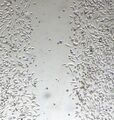 Rhabdomyosarcoma
 -
Uterine rhabdomyosarcoma
-
Uterine carcinosarcoma (1) rhabdomyosarcomatous
-
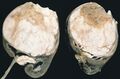 Wilms tumor


Can you help answer any of these frequently asked questions on Rhabdomyosarcoma?
- Is Stage 4 always terminal?
- What causes rhabdomyosarcoma?
- What is rhabdomyosarcoma stage4?
- Can you survive rhabdomyosarcoma?
- How serious is a rhabdomyosarcoma?
- Can rhabdomyosarcoma be inherited?
- Is rhabdomyosarcoma a solid tumor?
- Are you born with rhabdomyosarcoma?
- How do you prevent rhabdomyosarcoma?
- What is meant by 5-year survival rate?
- What are early signs of rhabdomyosarcoma?
- How quickly does rhabdomyosarcoma develop?
- How long can you live with rhabdomyosarcoma?
- What is the survival rate for rhabdomyosarcoma?
- How long does it take to cure rhabdomyosarcoma?
- What is the average age of onset of rhabdomyosarcoma?
- What is the most common treatment for rhabdomyosarcoma?
| Overview of tumors, cancer and oncology (C00–D48, 140–239) | ||||||||||||||||||||||
|---|---|---|---|---|---|---|---|---|---|---|---|---|---|---|---|---|---|---|---|---|---|---|
|

This WikiMD article can only be edited by registered and verified editors. You can log in or register.
Advertise on WikiMD — 81,000+ full articles, ~900,000 total pages, ~250 million page views. Global reach, limited time promotional rates from $1/page/day. Learn more · View stats

Translate page: - East Asian
中文,
日本,
한국어,
South Asian
हिन्दी,
தமிழ்,
తెలుగు,
Urdu,
ಕನ್ನಡ,
Southeast Asian
Indonesian,
Vietnamese,
Thai,
မြန်မာဘာသာ,
বাংলা
European
español,
Deutsch,
français,
Greek,
português do Brasil,
polski,
română,
русский,
Nederlands,
norsk,
svenska,
suomi,
Italian
Middle Eastern & African
عربى,
Turkish,
Persian,
Hebrew,
Afrikaans,
isiZulu,
Kiswahili,
Other
Bulgarian,
Hungarian,
Czech,
Swedish,
മലയാളം,
मराठी,
ਪੰਜਾਬੀ,
ગુજરાતી,
Portuguese,
Ukrainian
About WikiMD • Contact • Disclaimer • Privacy • Copyright • Site statistics
Some content and images may originate from Wikimedia Commons or Wikipedia and remain subject to their stated licenses. Unless otherwise noted, eligible WikiMD content is available under CC BY-SA 4.0.
WikiMD Wellnesspedia — Free health & wellness information for patients, students, and health professionals.


_(14777407172).jpg)
_rhabdomyosarcomatous.jpg)
_rhabdomyosarcomatous.jpg)