Anise: Difference between revisions
No edit summary Tags: mobile edit mobile web edit |
CSV import |
||
| (One intermediate revision by the same user not shown) | |||
| Line 1: | Line 1: | ||
{{Short description|An overview of the spice anise, its uses, and properties}} | |||
{{Infobox plant | {{Infobox plant | ||
| name = Anise | | name = Anise | ||
| image = | | image = Anise fruits.jpg | ||
| image_caption = Anise | | image_caption = Anise fruits | ||
| genus = ''Pimpinella'' | | genus = ''Pimpinella'' | ||
| species = ''P. anisum'' | | species = ''P. anisum'' | ||
| authority = L. | |||
}} | }} | ||
'''Anise''' (''Pimpinella anisum'') is a flowering plant native to the eastern Mediterranean region and Southwest Asia. | '''Anise''' (''Pimpinella anisum''), also known as '''aniseed''', is a flowering plant in the family [[Apiaceae]] native to the eastern Mediterranean region and Southwest Asia. The flavor of anise resembles that of [[liquorice]], [[fennel]], and [[tarragon]]. It is widely cultivated and used to flavor food, candy, and alcoholic beverages, especially in the Mediterranean region. | ||
== Description == | ==Description== | ||
Anise is an annual herb growing to 1 meter (3 feet) or more in height. The leaves at the base of the plant are simple, 2–5 cm long and shallowly lobed, while the leaves higher on the stems are feathery pinnate, divided into numerous small leaflets. The flowers are white, approximately 3 mm in diameter, produced in dense umbels. The fruit is an oblong dry schizocarp, 3–5 mm long, usually called "aniseed". | |||
Anise | ==History== | ||
Anise has been cultivated in Egypt since ancient times and was known to the Greeks and Romans. It was brought to Europe for its medicinal value and was used by the Romans in a spiced cake served at the end of feasts. Anise was also used in traditional medicine in the Middle East and India. | |||
== | ==Culinary Uses== | ||
Anise is used to flavor a variety of dishes, from baked goods to savory meals. It is a key ingredient in [[Italian cuisine|Italian]] biscotti and [[German cuisine|German]] pfeffernüsse. Anise is also used in the production of alcoholic beverages such as [[ouzo]], [[raki]], [[anisette]], and [[absinthe]]. | |||
Anise has been used | ==Medicinal Uses== | ||
Anise has been used in traditional medicine for its carminative, antiseptic, and antispasmodic properties. It is believed to aid digestion, relieve coughs, and act as a mild sedative. Anise oil is used in aromatherapy and as a flavoring agent in pharmaceuticals. | |||
Anise | ==Cultivation== | ||
Anise is best grown in light, fertile, well-drained soil. It requires a warm, frost-free growing season of at least 120 days. The seeds are sown in spring, and the plant requires full sun to thrive. Anise is harvested when the seeds are fully ripe and have turned gray-brown. | |||
== | ==Chemical Composition== | ||
The essential oil of anise contains anethole, which is responsible for its characteristic flavor and aroma. Other components include estragole, anisaldehyde, and anisketone. Anethole is also found in [[fennel]] and [[star anise]], contributing to their similar flavors. | |||
==Also see== | |||
* [[Fennel]] | |||
* [[Star anise]] | |||
* [[Liquorice]] | |||
* [[Absinthe]] | |||
* [[Ouzo]] | |||
{{Apiaceae}} | |||
{{Spices}} | |||
[[Category:Herbs]] | |||
[ | |||
[ | |||
[[Category:Spices]] | [[Category:Spices]] | ||
[[Category: | [[Category:Medicinal plants]] | ||
[[Category: | [[Category:Apiaceae]] | ||
[[Category:Flora of the Mediterranean]] | [[Category:Flora of the Mediterranean]] | ||
<gallery> | |||
File:Koehler1887-PimpinellaAnisum.jpg|Anise | |||
</gallery> | |||
Latest revision as of 01:21, 20 February 2025
An overview of the spice anise, its uses, and properties
Anise (Pimpinella anisum), also known as aniseed, is a flowering plant in the family Apiaceae native to the eastern Mediterranean region and Southwest Asia. The flavor of anise resembles that of liquorice, fennel, and tarragon. It is widely cultivated and used to flavor food, candy, and alcoholic beverages, especially in the Mediterranean region.
Description[edit]
Anise is an annual herb growing to 1 meter (3 feet) or more in height. The leaves at the base of the plant are simple, 2–5 cm long and shallowly lobed, while the leaves higher on the stems are feathery pinnate, divided into numerous small leaflets. The flowers are white, approximately 3 mm in diameter, produced in dense umbels. The fruit is an oblong dry schizocarp, 3–5 mm long, usually called "aniseed".
History[edit]
Anise has been cultivated in Egypt since ancient times and was known to the Greeks and Romans. It was brought to Europe for its medicinal value and was used by the Romans in a spiced cake served at the end of feasts. Anise was also used in traditional medicine in the Middle East and India.
Culinary Uses[edit]
Anise is used to flavor a variety of dishes, from baked goods to savory meals. It is a key ingredient in Italian biscotti and German pfeffernüsse. Anise is also used in the production of alcoholic beverages such as ouzo, raki, anisette, and absinthe.
Medicinal Uses[edit]
Anise has been used in traditional medicine for its carminative, antiseptic, and antispasmodic properties. It is believed to aid digestion, relieve coughs, and act as a mild sedative. Anise oil is used in aromatherapy and as a flavoring agent in pharmaceuticals.
Cultivation[edit]
Anise is best grown in light, fertile, well-drained soil. It requires a warm, frost-free growing season of at least 120 days. The seeds are sown in spring, and the plant requires full sun to thrive. Anise is harvested when the seeds are fully ripe and have turned gray-brown.
Chemical Composition[edit]
The essential oil of anise contains anethole, which is responsible for its characteristic flavor and aroma. Other components include estragole, anisaldehyde, and anisketone. Anethole is also found in fennel and star anise, contributing to their similar flavors.
Also see[edit]
-
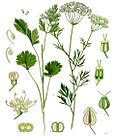 Anise
Anise

