Broken rice
Broken rice is a grade of rice consisting of grains broken in the milling process. It is a byproduct of rice milling and has a similar nutritional content to intact rice, but has a different, softer texture and quicker cooking time.
History[edit]
Broken rice is believed to have originated in Southeast Asia, where rice is a staple food. It was traditionally considered inferior and often given to the poor or used as animal feed. However, it has gained popularity in recent years due to its unique texture and flavor.
Production[edit]
During the milling process, some rice grains get broken. These broken grains are separated from the whole grains through a series of sieves. The percentage of broken rice is usually used as a criterion for the quality of milled rice. The higher the percentage of broken rice, the lower the quality of the rice.
Uses[edit]
Broken rice is used in a variety of dishes across different cultures. In Vietnam, it is used in a popular dish called com tam, which translates to "broken rice". In West Africa, it is often used in dishes like jollof rice. It is also used in brewing certain types of beer and sake.
Nutritional Value[edit]
Broken rice has a similar nutritional value to unbroken rice, providing carbohydrates, protein, and a small amount of fat. It is also a good source of vitamins and minerals, including vitamin B1, vitamin B3, and iron.
See Also[edit]
 Vietnamese cuisine
 |
||||||||||
|---|---|---|---|---|---|---|---|---|---|---|
|
| African cuisine | ||||||
|---|---|---|---|---|---|---|
* Category
|

-
 Broken rice brisée
 -
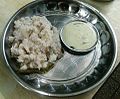 Broken rice upma & coconut chutney
 -
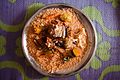 Thieboudienne Mauritanienne


Ad. Transform your health with W8MD Weight Loss, Sleep & MedSpa

Tired of being overweight?
Special offer:
Budget GLP-1 weight loss medications
- Semaglutide starting from $29.99/week and up with insurance for visit of $59.99 and up per week self pay.
- Tirzepatide starting from $45.00/week and up (dose dependent) or $69.99/week and up self pay
✔ Same-week appointments, evenings & weekends
Learn more:
- GLP-1 weight loss clinic NYC
- W8MD's NYC medical weight loss
- W8MD Philadelphia GLP-1 shots
- Philadelphia GLP-1 injections
- Affordable GLP-1 shots NYC
|
WikiMD Medical Encyclopedia |
Medical Disclaimer: WikiMD is for informational purposes only and is not a substitute for professional medical advice. Content may be inaccurate or outdated and should not be used for diagnosis or treatment. Always consult your healthcare provider for medical decisions. Verify information with trusted sources such as CDC.gov and NIH.gov. By using this site, you agree that WikiMD is not liable for any outcomes related to its content. See full disclaimer.
Credits:Most images are courtesy of Wikimedia commons, and templates, categories Wikipedia, licensed under CC BY SA or similar.
Translate this page: - East Asian
中文,
日本,
한국어,
South Asian
हिन्दी,
தமிழ்,
తెలుగు,
Urdu,
ಕನ್ನಡ,
Southeast Asian
Indonesian,
Vietnamese,
Thai,
မြန်မာဘာသာ,
বাংলা
European
español,
Deutsch,
français,
Greek,
português do Brasil,
polski,
română,
русский,
Nederlands,
norsk,
svenska,
suomi,
Italian
Middle Eastern & African
عربى,
Turkish,
Persian,
Hebrew,
Afrikaans,
isiZulu,
Kiswahili,
Other
Bulgarian,
Hungarian,
Czech,
Swedish,
മലയാളം,
मराठी,
ਪੰਜਾਬੀ,
ગુજરાતી,
Portuguese,
Ukrainian
