Gabonese cuisine
Gabonese cuisine is the cooking traditions, practices, foods and dishes associated with Gabon, a nation on the west coast of Central Africa. Rich in a variety of ingredients due to its diverse ecosystems, Gabonese cuisine is primarily centered around the staple foods of cassava, plantain, rice, and yam.
History[edit]
The history of Gabonese cuisine is deeply intertwined with the country's history. The indigenous Bantu tribes, who were the original inhabitants of Gabon, had a diet primarily based on plant foods, supplemented by hunting and fishing. With the arrival of European explorers and traders, new ingredients and cooking methods were introduced, which have influenced the cuisine to this day.
Ingredients[edit]
Gabonese cuisine is rich in fruits, vegetables, and proteins. The staple foods include cassava, plantain, rice, and yam. These are often served with a variety of sauces, made from ingredients such as palm oil, peanuts, and chili peppers. Meat, particularly bushmeat, is also a significant part of the Gabonese diet. Seafood, including fish and shellfish, is widely consumed due to Gabon's extensive coastline and rivers.
Dishes[edit]
One of the most popular dishes in Gabonese cuisine is Nyembwe chicken, a chicken dish cooked with palm nut sauce. Another popular dish is Mustard chicken, which is chicken cooked with mustard and other spices. Bouillon d'aubergine, a stew made with eggplant and other vegetables, is also a common dish.
Beverages[edit]
Traditional Gabonese beverages include palm wine, made from the sap of the palm tree, and Ogowe, a fermented drink made from the bark of the Ogowe tree. In recent years, beer has also become popular, with several local breweries in operation.
Influence[edit]
Gabonese cuisine has been influenced by the cuisines of neighboring countries, particularly Cameroon, Equatorial Guinea, and the Republic of Congo. In turn, Gabonese dishes have also influenced the cuisines of these countries.
See also[edit]


-
 Map of Gabon
 -
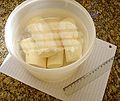 Peeled Cassava
 -
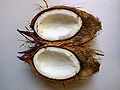 Coconut


Medical Disclaimer: WikiMD is for informational purposes only and is not a substitute for professional medical advice. Content may be inaccurate or outdated and should not be used for diagnosis or treatment. Always consult your healthcare provider for medical decisions. Verify information with trusted sources such as CDC.gov and NIH.gov. By using this site, you agree that WikiMD is not liable for any outcomes related to its content. See full disclaimer.
Credits:Most images are courtesy of Wikimedia commons, and templates, categories Wikipedia, licensed under CC BY SA or similar.
Translate page: - East Asian
中文,
日本,
한국어,
South Asian
हिन्दी,
தமிழ்,
తెలుగు,
Urdu,
ಕನ್ನಡ,
Southeast Asian
Indonesian,
Vietnamese,
Thai,
မြန်မာဘာသာ,
বাংলা
European
español,
Deutsch,
français,
Greek,
português do Brasil,
polski,
română,
русский,
Nederlands,
norsk,
svenska,
suomi,
Italian
Middle Eastern & African
عربى,
Turkish,
Persian,
Hebrew,
Afrikaans,
isiZulu,
Kiswahili,
Other
Bulgarian,
Hungarian,
Czech,
Swedish,
മലയാളം,
मराठी,
ਪੰਜਾਬੀ,
ગુજરાતી,
Portuguese,
Ukrainian

