Wehani rice
Wehani Rice is a type of whole grain rice that is grown in the United States. It is a variety of aromatic rice and is known for its unique flavor and nutritional benefits.
History[edit]
Wehani rice was developed by the Lundberg Family Farms, a company based in California. The rice is named after the three brothers who founded the company: Wendell, Homer, and Eldon. The Lundberg family has been growing rice since the 1930s and is known for their commitment to sustainable farming practices.
Characteristics[edit]
Wehani rice is a long-grain rice that is reddish-brown in color. It has a nutty flavor and a chewy texture. When cooked, it has a fragrance similar to that of hot, buttered popcorn. The rice is often compared to basmati rice and wild rice due to its aroma and flavor.
Cultivation[edit]
Wehani rice is grown in the Sacramento Valley in California. The rice is harvested in the fall and is typically available for purchase year-round. The rice is grown using organic farming methods, which means it is free from synthetic pesticides and fertilizers.
Nutritional Value[edit]
Wehani rice is a whole grain, which means it contains all parts of the grain — the bran, germ, and endosperm. Whole grains are a good source of fiber, which can help to improve digestion and reduce the risk of heart disease. Wehani rice is also a good source of protein and contains several essential vitamins and minerals, including vitamin B, iron, and magnesium.
Culinary Uses[edit]
Wehani rice can be used in a variety of dishes. It is often used in pilafs, salads, and stir-fry dishes. The rice can also be used as a side dish or as a base for main dishes. Its unique flavor and texture make it a popular choice for gourmet recipes.
See Also[edit]
| Rice Varieties | ||||||||
|---|---|---|---|---|---|---|---|---|
This rice varieties related article is a stub.
|

Wehani rice gallery[edit]
-
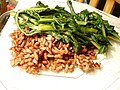 Plate of Wehani rice with sautéed dandelion greens


Medical Disclaimer: WikiMD is for informational purposes only and is not a substitute for professional medical advice. Content may be inaccurate or outdated and should not be used for diagnosis or treatment. Always consult your healthcare provider for medical decisions. Verify information with trusted sources such as CDC.gov and NIH.gov. By using this site, you agree that WikiMD is not liable for any outcomes related to its content. See full disclaimer.
Credits:Most images are courtesy of Wikimedia commons, and templates, categories Wikipedia, licensed under CC BY SA or similar.
Translate page: - East Asian
中文,
日本,
한국어,
South Asian
हिन्दी,
தமிழ்,
తెలుగు,
Urdu,
ಕನ್ನಡ,
Southeast Asian
Indonesian,
Vietnamese,
Thai,
မြန်မာဘာသာ,
বাংলা
European
español,
Deutsch,
français,
Greek,
português do Brasil,
polski,
română,
русский,
Nederlands,
norsk,
svenska,
suomi,
Italian
Middle Eastern & African
عربى,
Turkish,
Persian,
Hebrew,
Afrikaans,
isiZulu,
Kiswahili,
Other
Bulgarian,
Hungarian,
Czech,
Swedish,
മലയാളം,
मराठी,
ਪੰਜਾਬੀ,
ગુજરાતી,
Portuguese,
Ukrainian

