Cơm rượu
Cơm rượu is a traditional Vietnamese dessert made from fermented glutinous rice and yeast. The dessert is known for its sweet and slightly alcoholic taste, and is often served in small, ball-like portions.
History[edit]
The origins of Cơm rượu are deeply rooted in Vietnamese culture and tradition. The dessert is believed to have been first made by farmers in the rural areas of Vietnam, who used the abundant supply of glutinous rice and natural yeast to create a simple yet satisfying dessert. Over time, the popularity of Cơm rượu spread throughout the country, and it is now a staple dessert in many Vietnamese households and restaurants.
Preparation[edit]
The preparation of Cơm rượu involves soaking glutinous rice in water for several hours, then steaming it until it becomes soft and sticky. The cooked rice is then mixed with a special type of yeast, known as Men, which is made from rice flour and various types of mold. The mixture is left to ferment for several days, during which time the yeast converts the sugars in the rice into alcohol. The result is a sweet, slightly alcoholic dessert that is often served in small, ball-like portions.
Cultural Significance[edit]
Cơm rượu holds a significant place in Vietnamese culture. It is often served during special occasions and celebrations, such as Tết, the Vietnamese New Year. In addition, it is also used in various religious rituals and ceremonies, as it is believed to bring good luck and prosperity.
Variations[edit]
There are several variations of Cơm rượu, each with its own unique taste and texture. Some versions of the dessert are made with black glutinous rice, which gives the dessert a darker color and a slightly different flavor. Other versions are made with additional ingredients, such as coconut milk or pandan leaves, which add extra layers of flavor to the dessert.
See Also[edit]


-
 Cơm rượu
 -
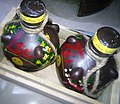 Rượu nếp cái hoa vàng ở Đông Hà, Tết năm 2019

.jpg)
Sponsored Health Resource

W8MD Weight Loss, Sleep & MedSpa
Looking for physician-supervised weight loss, semaglutide, tirzepatide, or GLP-1 receptor agonist options? W8MD helps eligible patients in New York City, Brooklyn, New Jersey, Connecticut, Pennsylvania, Delaware, and greater Philadelphia with medical weight loss, sleep medicine, and long-term maintenance support.
GLP-1 specials: Affordable GLP-1 injections NYC and Philadelphia starting from $29.99/week and up for semaglutide with insurance accepted for qualifying visits, and $45/week and up for tirzepatide with insurance accepted for qualifying visits. Self-pay options start from $59.99/week and up for semaglutide and $69.99/week and up for tirzepatide.
Medical weight loss NYC | Affordable GLP-1 injections NYC | Budget GLP-1 weight loss shots Philadelphia | New Jersey medical weight loss | NYC medical weight loss | Philadelphia medical weight loss | Sleep clinic NYC | W8MD's Philadelphia GLP-1 doctor | Weight loss prescriptions NYC
Book a W8MD appointment · View GLP-1 specials
Paid promotional message. Eligibility, pricing, insurance coverage, medication availability, and results vary. Medical evaluation required.

Medical Disclaimer: WikiMD is for informational purposes only and is not a substitute for professional medical advice. Content may be inaccurate or outdated and should not be used for diagnosis or treatment. Always consult your healthcare provider for medical decisions. Verify information with trusted sources such as CDC.gov and NIH.gov. By using this site, you agree that WikiMD is not liable for any outcomes related to its content. See full disclaimer.
Credits:Most images are courtesy of Wikimedia commons, and templates, categories Wikipedia, licensed under CC BY SA or similar.
Translate page: - East Asian
中文,
日本,
한국어,
South Asian
हिन्दी,
தமிழ்,
తెలుగు,
Urdu,
ಕನ್ನಡ,
Southeast Asian
Indonesian,
Vietnamese,
Thai,
မြန်မာဘာသာ,
বাংলা
European
español,
Deutsch,
français,
Greek,
português do Brasil,
polski,
română,
русский,
Nederlands,
norsk,
svenska,
suomi,
Italian
Middle Eastern & African
عربى,
Turkish,
Persian,
Hebrew,
Afrikaans,
isiZulu,
Kiswahili,
Other
Bulgarian,
Hungarian,
Czech,
Swedish,
മലയാളം,
मराठी,
ਪੰਜਾਬੀ,
ગુજરાતી,
Portuguese,
Ukrainian

