Ethiopian cuisine
Ethiopian cuisine consists of various vegetable or meat side dishes and entrées, usually a wat, or thick stew, served atop injera, a large sourdough flatbread. Ethiopian food is not only healthy and nutritious, but it's also a great way to expose children to new flavors and foods.
Overview[edit]
Ethiopian cuisine characteristically consists of vegetable and often very spicy meat dishes. This is usually in the form of wat, a thick stew, served atop injera, a large sourdough flatbread, which is about 50 centimeters (20 inches) in diameter and made out of fermented teff flour.
Ingredients[edit]
Ethiopian cooking can be heavy on meat — but the east African country’s cuisine is also full of delicious and super-satisfying dishes that are perfect for vegetarian, vegan, and gluten and lactose-free eaters. Key ingredients in most dishes are berbere, a spicy red pepper spice mix, and niter kibbeh, a spiced clarified butter.
Dishes[edit]
Some popular Ethiopian dishes include Doro Wat, Kitfo, and Firfir. Doro Wat is a spicy chicken stew made with berbere spice and niter kibbeh. Kitfo is a dish made from raw minced beef, similar to steak tartare. Firfir are shredded pieces of injera that are stir-fried with spices or sauce.
Eating Customs[edit]
Ethiopians traditionally eat with their hands and use pieces of injera to pick up bites of entrées and side dishes. Utensils are rarely used with this dish.
Beverages[edit]
Traditional Ethiopian beverages include Tella, an Ethiopian beer, and Tej, a honey wine. Non-alcoholic beverages include Buna, Ethiopian coffee, and Shai, Ethiopian tea.
See Also[edit]

-
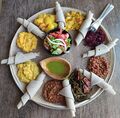 Injera with eight kinds of stew
 -
Ethiopian cuisine
-
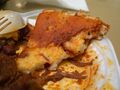 Kita herb bread
 -
Berbere and other ingredients
-
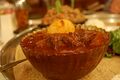 Ethiopian wat
 -
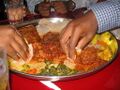 Ethiopian food
 -
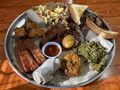 Ethiopian cuisine fusion
 -
Kitfo
-
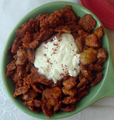 Kitcha fit fit
 -
Ethiopian Coca Cola bottle
-
Ethiopian cuisine


Medical Disclaimer: WikiMD is for informational purposes only and is not a substitute for professional medical advice. Content may be inaccurate or outdated and should not be used for diagnosis or treatment. Always consult your healthcare provider for medical decisions. Verify information with trusted sources such as CDC.gov and NIH.gov. By using this site, you agree that WikiMD is not liable for any outcomes related to its content. See full disclaimer.
Credits:Most images are courtesy of Wikimedia commons, and templates, categories Wikipedia, licensed under CC BY SA or similar.
Translate page: - East Asian
中文,
日本,
한국어,
South Asian
हिन्दी,
தமிழ்,
తెలుగు,
Urdu,
ಕನ್ನಡ,
Southeast Asian
Indonesian,
Vietnamese,
Thai,
မြန်မာဘာသာ,
বাংলা
European
español,
Deutsch,
français,
Greek,
português do Brasil,
polski,
română,
русский,
Nederlands,
norsk,
svenska,
suomi,
Italian
Middle Eastern & African
عربى,
Turkish,
Persian,
Hebrew,
Afrikaans,
isiZulu,
Kiswahili,
Other
Bulgarian,
Hungarian,
Czech,
Swedish,
മലയാളം,
मराठी,
ਪੰਜਾਬੀ,
ગુજરાતી,
Portuguese,
Ukrainian


