Sumac
Sumac
Sumac is a flowering plant belonging to the genus *Rhus* in the family Anacardiaceae. It is known for its vibrant red berries and is used both as a spice and for medicinal purposes. Sumac is native to subtropical and temperate regions worldwide, including parts of Africa, North America, and the Middle East.
Description[edit]
Sumac plants are shrubs or small trees that can grow up to 1-10 meters in height. They have pinnately compound leaves and produce dense clusters of reddish drupes, which are the fruit of the plant. The leaves of sumac turn a brilliant red in the autumn, adding to its ornamental appeal.
Culinary Uses[edit]
Sumac is widely used in Middle Eastern cuisine. The dried and ground berries have a tangy, lemony flavor and are often used as a spice in dishes such as za'atar, salads, and grilled meats. It is a key ingredient in the spice mix za'atar, which is used to season a variety of dishes.
Medicinal Uses[edit]
Historically, sumac has been used in traditional medicine for its potential health benefits. It is believed to have antioxidant, anti-inflammatory, and antimicrobial properties. Some studies suggest that sumac may help in managing blood sugar levels and reducing cholesterol.
Toxicity[edit]
While many species of sumac are safe and edible, it is important to distinguish them from the toxic species, such as poison sumac (*Toxicodendron vernix*), which can cause skin irritation and allergic reactions. Poison sumac is typically found in wet, swampy areas and has white berries, unlike the red berries of edible sumac.
Cultivation[edit]
Sumac is relatively easy to grow and is tolerant of a variety of soil types. It prefers well-drained soil and full sun to partial shade. Sumac can be propagated by seed or cuttings and is often used in landscaping for its ornamental foliage and berries.
Also see[edit]
-
 Sumac Fruit
 -
 Sumac Drupes
 -
 Rhus typhina
 -
 Rhus copallinum
 -
 Rhus sp hybrid
 -
Sumaq
-
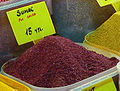 Sumac
Sumac


Medical Disclaimer: WikiMD is for informational purposes only and is not a substitute for professional medical advice. Content may be inaccurate or outdated and should not be used for diagnosis or treatment. Always consult your healthcare provider for medical decisions. Verify information with trusted sources such as CDC.gov and NIH.gov. By using this site, you agree that WikiMD is not liable for any outcomes related to its content. See full disclaimer.
Credits:Most images are courtesy of Wikimedia commons, and templates, categories Wikipedia, licensed under CC BY SA or similar.
Translate this page: - East Asian
中文,
日本,
한국어,
South Asian
हिन्दी,
தமிழ்,
తెలుగు,
Urdu,
ಕನ್ನಡ,
Southeast Asian
Indonesian,
Vietnamese,
Thai,
မြန်မာဘာသာ,
বাংলা
European
español,
Deutsch,
français,
Greek,
português do Brasil,
polski,
română,
русский,
Nederlands,
norsk,
svenska,
suomi,
Italian
Middle Eastern & African
عربى,
Turkish,
Persian,
Hebrew,
Afrikaans,
isiZulu,
Kiswahili,
Other
Bulgarian,
Hungarian,
Czech,
Swedish,
മലയാളം,
मराठी,
ਪੰਜਾਬੀ,
ગુજરાતી,
Portuguese,
Ukrainian

