Sicilian cuisine
Sicilian cuisine is the style of cooking on the island of Sicily. It shows traces of all cultures that have existed on the island of Sicily over the last two millennia. Although its cuisine has a lot in common with Italian cuisine, Sicilian food also has Greek, Spanish, French and Arab influences.
History[edit]
The Sicilian cuisine has a long tradition for being full of flavors which were brought to Sicily by the many people who crossed this beautiful land: Phoenicians, Greeks, Romans, Arabs, Normans, French, Spanish, and Italians brought their own ingredients and cooking techniques, and mixed them with the local ones, thus creating a unique and unmatched cuisine.
Ingredients[edit]
The island itself is mainly hilly, offering a wide variety of locally produced vegetables and fruit, such as tomatoes, artichokes, onions, olives, citrus fruits, and grapes. A more complicated dish of the region is Caponata, a sweet and sour version of Ratatouille.
Dishes[edit]
Some popular dishes include Caponata, Pasta alla Norma (a dish made with tomatoes, fried aubergine, grated ricotta cheese, and basil), Arancini (stuffed rice balls which are coated with bread crumbs and then deep fried), and Cannoli (a dessert of tube-shaped shells of fried pastry dough, filled with a sweet, creamy filling).
Desserts[edit]
Sicilian desserts are outstanding and unique. They are typically made with ricotta cheese, almonds, and pistachios. There are many sweets, pastries, cakes, and candies which are enjoyed by Sicilians during the holidays. The most well-known dessert might be the Cannoli, but Sicilian desserts also include Cassata, Granita, and Buccellato.
Wines[edit]
Sicily is also known for its wine. It has several indigenous grape varieties, such as the Nero d'Avola, used to produce red wines, and the Moscato di Pantelleria, used to produce sweet dessert wines.
See also[edit]
|
History |
|---|
|
Regional cuisines |
|
Lists |
|
See also |
| Mediterranean cuisine | ||||||
|---|---|---|---|---|---|---|
* Category
|

Sicilian_cuisine[edit]
-
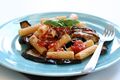 Pasta alla Norma
 -
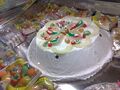 Cassata
 -
Granita with brioche
-
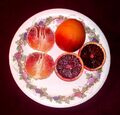 Blood oranges
 -
Limoncello
-
Arancini
.jpg)


Medical Disclaimer: WikiMD is for informational purposes only and is not a substitute for professional medical advice. Content may be inaccurate or outdated and should not be used for diagnosis or treatment. Always consult your healthcare provider for medical decisions. Verify information with trusted sources such as CDC.gov and NIH.gov. By using this site, you agree that WikiMD is not liable for any outcomes related to its content. See full disclaimer.
Credits:Most images are courtesy of Wikimedia commons, and templates, categories Wikipedia, licensed under CC BY SA or similar.
Translate page: - East Asian
中文,
日本,
한국어,
South Asian
हिन्दी,
தமிழ்,
తెలుగు,
Urdu,
ಕನ್ನಡ,
Southeast Asian
Indonesian,
Vietnamese,
Thai,
မြန်မာဘာသာ,
বাংলা
European
español,
Deutsch,
français,
Greek,
português do Brasil,
polski,
română,
русский,
Nederlands,
norsk,
svenska,
suomi,
Italian
Middle Eastern & African
عربى,
Turkish,
Persian,
Hebrew,
Afrikaans,
isiZulu,
Kiswahili,
Other
Bulgarian,
Hungarian,
Czech,
Swedish,
മലയാളം,
मराठी,
ਪੰਜਾਬੀ,
ગુજરાતી,
Portuguese,
Ukrainian


