Levantine cuisine
Levantine cuisine is a traditional style of cooking from the Levant region, which includes the modern countries of Syria, Lebanon, Jordan, Israel, Palestine, and parts of Turkey. It is characterized by its emphasis on fresh ingredients, aromatic spices, and a variety of textures and flavors.
History[edit]
The history of Levantine cuisine dates back thousands of years, with influences from various cultures and civilizations that have occupied the region, including the Ancient Egyptians, Persians, Romans, and Ottomans. Many traditional dishes have been passed down through generations and are still popular today.
Ingredients[edit]
Common ingredients in Levantine cuisine include olive oil, lemons, garlic, chickpeas, lentils, and a variety of fresh fruits and vegetables. Meat, particularly lamb and chicken, is also commonly used, although many dishes are vegetarian or vegan-friendly.
Dishes[edit]
Some of the most well-known dishes from Levantine cuisine include hummus, a dip made from chickpeas and tahini; falafel, deep-fried balls of chickpea or fava bean dough; and tabbouleh, a salad made with bulgur wheat, tomatoes, parsley, and mint. Other popular dishes include shawarma, a meat dish that is typically served in a pita bread with tahini sauce, and baklava, a sweet pastry made with layers of filo dough filled with chopped nuts and sweetened with syrup or honey.
Influence[edit]
Levantine cuisine has had a significant influence on other culinary traditions, particularly in the Middle East and Mediterranean. Its emphasis on fresh ingredients and simple, flavorful dishes has also made it popular among health-conscious diners around the world.
See also[edit]

This WikiMD article can only be edited by registered and verified editors. You can log in or register.
Levantine_cuisine[edit]
-
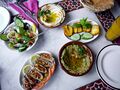 A traditional Syrian meal
 -
Baba Ghannoush
-
Falafels
-
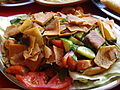 Fattoush salad
 -
Manaqish
-
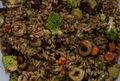 Freekeh with roasted vegetables
 -
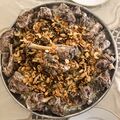 Mansaf, the traditional dish of Jordan
 -
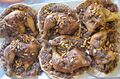 Mushakhan
 -
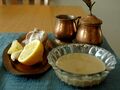 Tahina
 -
Künefe


Advertise on WikiMD — 81,000+ full articles, ~900,000 total pages, ~250 million page views. Global reach, limited time promotional rates from $1/page/day. Learn more · View stats

Translate page: - East Asian
中文,
日本,
한국어,
South Asian
हिन्दी,
தமிழ்,
తెలుగు,
Urdu,
ಕನ್ನಡ,
Southeast Asian
Indonesian,
Vietnamese,
Thai,
မြန်မာဘာသာ,
বাংলা
European
español,
Deutsch,
français,
Greek,
português do Brasil,
polski,
română,
русский,
Nederlands,
norsk,
svenska,
suomi,
Italian
Middle Eastern & African
عربى,
Turkish,
Persian,
Hebrew,
Afrikaans,
isiZulu,
Kiswahili,
Other
Bulgarian,
Hungarian,
Czech,
Swedish,
മലയാളം,
मराठी,
ਪੰਜਾਬੀ,
ગુજરાતી,
Portuguese,
Ukrainian
About WikiMD • Contact • Disclaimer • Privacy • Copyright • Site statistics
Some content and images may originate from Wikimedia Commons or Wikipedia and remain subject to their stated licenses. Unless otherwise noted, eligible WikiMD content is available under CC BY-SA 4.0.
WikiMD Wellnesspedia — Free health & wellness information for patients, students, and health professionals.


