Cassata


Cassata is a traditional Sicilian dessert that has become popular in various parts of the world. It is a type of cake that is typically made with ricotta cheese, candied fruit, and marzipan. The dessert is known for its rich flavors and vibrant appearance, often decorated with colorful icing and intricate designs.
History[edit]
The origins of cassata can be traced back to the Arab rule in Sicily during the 10th century. The Arabs introduced sugar, citrus, and almonds to the region, which became key ingredients in the making of cassata. Over the centuries, the recipe evolved, incorporating influences from Norman, Spanish, and Italian culinary traditions.
Ingredients[edit]
The main ingredients of cassata include:
- Ricotta cheese
- Sugar
- Sponge cake
- Candied fruit
- Marzipan
- Chocolate
- Liqueur (optional)
Preparation[edit]
The preparation of cassata involves several steps: 1. Ricotta Filling: The ricotta cheese is mixed with sugar and sometimes chocolate chips or candied fruit. 2. Sponge Cake: A layer of sponge cake is placed at the bottom of a mold. 3. Assembly: The ricotta mixture is spread over the sponge cake, and additional layers of cake and ricotta are added. 4. Marzipan: The cake is covered with a layer of marzipan, which can be colored with food dye. 5. Decoration: The cassata is decorated with candied fruit and icing, often in elaborate patterns.
Variations[edit]
There are several variations of cassata, including:
- Cassata al forno: A baked version of the dessert.
- Cassata gelato: A frozen version made with ice cream instead of ricotta cheese.
Cultural Significance[edit]
Cassata is traditionally served during Easter and other festive occasions in Sicily. It is a symbol of the region's rich culinary heritage and is often enjoyed as a special treat during celebrations.
Related Pages[edit]
Categories[edit]
 | This dessert-related article is a stub. You can help WikiMD by expanding the page. |
-
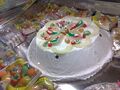 Cassata


Medical Disclaimer: WikiMD is for informational purposes only and is not a substitute for professional medical advice. Content may be inaccurate or outdated and should not be used for diagnosis or treatment. Always consult your healthcare provider for medical decisions. Verify information with trusted sources such as CDC.gov and NIH.gov. By using this site, you agree that WikiMD is not liable for any outcomes related to its content. See full disclaimer.
Credits:Most images are courtesy of Wikimedia commons, and templates, categories Wikipedia, licensed under CC BY SA or similar.
Translate page: - East Asian
中文,
日本,
한국어,
South Asian
हिन्दी,
தமிழ்,
తెలుగు,
Urdu,
ಕನ್ನಡ,
Southeast Asian
Indonesian,
Vietnamese,
Thai,
မြန်မာဘာသာ,
বাংলা
European
español,
Deutsch,
français,
Greek,
português do Brasil,
polski,
română,
русский,
Nederlands,
norsk,
svenska,
suomi,
Italian
Middle Eastern & African
عربى,
Turkish,
Persian,
Hebrew,
Afrikaans,
isiZulu,
Kiswahili,
Other
Bulgarian,
Hungarian,
Czech,
Swedish,
മലയാളം,
मराठी,
ਪੰਜਾਬੀ,
ગુજરાતી,
Portuguese,
Ukrainian

