Scientific diving
Scientific diving is a type of underwater diving that is used for scientific research purposes. It involves the use of specialized diving equipment and techniques to collect data, conduct experiments, and perform surveys underwater.
History[edit]
The history of scientific diving dates back to the early 20th century when the first diving helmets and diving suits were developed. These early diving systems allowed scientists to explore underwater environments and conduct research in ways that were previously impossible.
Types of Scientific Diving[edit]
There are several types of scientific diving, each with its own specific goals and techniques. These include:
- Archaeological diving: This involves diving to underwater archaeological sites to study and preserve historical artifacts.
- Biological diving: This involves diving to study marine life and ecosystems.
- Geological diving: This involves diving to study the geology and physical processes of the underwater environment.
- Environmental diving: This involves diving to monitor and assess the health of underwater environments.
Equipment[edit]
Scientific divers use a variety of equipment, including scuba gear, underwater cameras, sonar systems, and remote operated vehicles (ROVs). The specific equipment used depends on the nature of the research being conducted.
Training and Certification[edit]
Scientific divers must undergo rigorous training and certification. This typically involves completing a basic scuba diving certification, followed by additional training in scientific diving techniques and safety procedures. Many countries have organizations that oversee the certification of scientific divers, such as the American Academy of Underwater Sciences (AAUS) in the United States.
Safety and Regulations[edit]
Safety is a paramount concern in scientific diving. Divers must follow strict safety protocols to minimize the risk of accidents and injuries. These protocols include proper equipment maintenance, dive planning, and emergency procedures. In many countries, scientific diving is regulated by government agencies to ensure safety standards are met.
See Also[edit]
 | This science article is a stub. You can help WikiMD by expanding the page. |
-
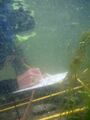 Scale drawing underwater
 -
Cave diver running a reel
-
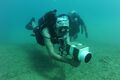 US Navy Explosive Ordnance Disposal Technician training with hand held sonar
 -
Sampling Bermuda
-
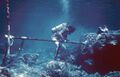 Coral drilling
 -
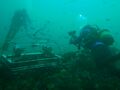 Divers inspecting a stereo BRUVS frame at Rheeder's Reef
 -
Diving gear
-
NOAA Photo Library
-
NOAA Photo Library
-
Researchers collecting invasive Eurasian Watermilfoil


Advertise on WikiMD — 81,000+ full articles, ~900,000 total pages, ~250 million page views. Global reach, limited time promotional rates from $1/page/day. Learn more · View stats


Translate page: - East Asian
中文,
日本,
한국어,
South Asian
हिन्दी,
தமிழ்,
తెలుగు,
Urdu,
ಕನ್ನಡ,
Southeast Asian
Indonesian,
Vietnamese,
Thai,
မြန်မာဘာသာ,
বাংলা
European
español,
Deutsch,
français,
Greek,
português do Brasil,
polski,
română,
русский,
Nederlands,
norsk,
svenska,
suomi,
Italian
Middle Eastern & African
عربى,
Turkish,
Persian,
Hebrew,
Afrikaans,
isiZulu,
Kiswahili,
Other
Bulgarian,
Hungarian,
Czech,
Swedish,
മലയാളം,
मराठी,
ਪੰਜਾਬੀ,
ગુજરાતી,
Portuguese,
Ukrainian
About WikiMD • Contact • Disclaimer • Privacy • Copyright • Site statistics
Some content and images may originate from Wikimedia Commons or Wikipedia and remain subject to their stated licenses. Unless otherwise noted, eligible WikiMD content is available under CC BY-SA 4.0.
WikiMD Wellnesspedia — Free health & wellness information for patients, students, and health professionals.


