Nitrox
Nitrox refers to any gas mixture composed (N2 ) and oxygen (O2 ). It is commonly used in scuba diving and underwater diving due to its potential benefits in reducing the risk of decompression sickness or "the bends". Nitrox is also known as Enriched Air Nitrox (EAN), Nitrox, EANx or Safe Air.
Composition[edit]
Nitrox is a blend of nitrogen and oxygen where the oxygen concentration is greater than that of air. The most common mixtures are Nitrox I (32% oxygen) and Nitrox II (36% oxygen). The percentage of oxygen in the mix defines the maximum depth at which it can be safely used to avoid oxygen toxicity.
Usage[edit]
Nitrox is primarily used in recreational scuba diving to extend the no-decompression limit (NDL), reduce decompression time, or reduce the risk of decompression sickness. It is not a deep-diving gas mix due to the risk of oxygen toxicity caused by the high partial pressure of oxygen (ppO2) at depth.
Benefits and Risks[edit]
The main benefit of using nitrox is the reduced fraction of nitrogen in the breathing gas, which reduces the risk of decompression sickness. However, the increased fraction of oxygen leads to an increased risk of oxygen toxicity, which can lead to convulsions and other symptoms. Therefore, divers must be trained in nitrox use and must use oxygen analyzers to verify the mix before each dive.
Training[edit]
Several diving organizations offer training in nitrox use, including PADI, SSI, and NAUI. The training includes dive planning, oxygen exposure management, and equipment considerations.
See Also[edit]
 | This medical article is a stub. You can help WikiMD by expanding the page. |
Nitrox[edit]
-
Relative narcotic potency of gases
-
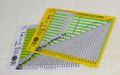 Nitrox tables for dive planning
 -
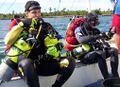 Preparing for a decompression dive
 -
 EANx decal for nitrox cylinders
 -
Modified cylinder for nitrox use


Advertise on WikiMD — 81,000+ full articles, ~900,000 total pages, ~250 million page views. Global reach, limited time promotional rates from $1/page/day. Learn more · View stats


Translate page: - East Asian
中文,
日本,
한국어,
South Asian
हिन्दी,
தமிழ்,
తెలుగు,
Urdu,
ಕನ್ನಡ,
Southeast Asian
Indonesian,
Vietnamese,
Thai,
မြန်မာဘာသာ,
বাংলা
European
español,
Deutsch,
français,
Greek,
português do Brasil,
polski,
română,
русский,
Nederlands,
norsk,
svenska,
suomi,
Italian
Middle Eastern & African
عربى,
Turkish,
Persian,
Hebrew,
Afrikaans,
isiZulu,
Kiswahili,
Other
Bulgarian,
Hungarian,
Czech,
Swedish,
മലയാളം,
मराठी,
ਪੰਜਾਬੀ,
ગુજરાતી,
Portuguese,
Ukrainian
About WikiMD • Contact • Disclaimer • Privacy • Copyright • Site statistics
Some content and images may originate from Wikimedia Commons or Wikipedia and remain subject to their stated licenses. Unless otherwise noted, eligible WikiMD content is available under CC BY-SA 4.0.
WikiMD Wellnesspedia — Free health & wellness information for patients, students, and health professionals.


