Submarine pipeline
Submarine pipeline is a type of pipeline specifically designed and constructed for transportation of oil, natural gas or other substances across bodies of water, most commonly across the seabed. These pipelines are used extensively in the oil and gas industry due to their efficiency and the cost-effectiveness of pipeline transport.
History[edit]
The first submarine pipeline was laid in 1859 across the Isar River in Germany. The technology has since evolved, with modern pipelines being able to operate in deep water and withstand harsh environmental conditions.
Design and Construction[edit]
The design and construction of a submarine pipeline is a complex process that involves numerous considerations. These include the type of product to be transported, the distance and depth of the pipeline, the seabed conditions, and the environmental impact.
The pipeline is typically constructed in sections on land before being welded together and laid on the seabed using a pipeline laying vessel. The pipeline is then tested and inspected before being put into operation.
Operation and Maintenance[edit]
The operation of a submarine pipeline involves the continuous monitoring of the pipeline's performance and the product being transported. This is typically done using SCADA systems and pipeline inspection gauges (PIGs).
Maintenance of submarine pipelines can be challenging due to their inaccessibility. However, various methods such as ROVs and divers are used for inspection and repair work.
Environmental Impact[edit]
Submarine pipelines can have a significant environmental impact, particularly during construction when seabed disturbance can occur. However, once in operation, they are generally considered to be a more environmentally friendly transport option than shipping.
See Also[edit]
References[edit]
 | This article about energy, its collection, its distribution, or its uses is a stub. You can help WikiMD by expanding the page. |
 | This engineering-related article is a stub. You can help WikiMD by expanding the page. |
-
 Submarine pipeline
 -
 Submarine pipeline
 -
 Submarine pipeline
 -
 Submarine pipeline
 -
 Submarine pipeline
 -
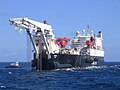 Submarine pipeline
 -
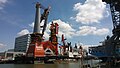 Submarine pipeline
 -
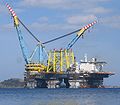 Submarine pipeline
 -
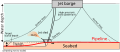 Submarine pipeline
 -
 Submarine pipeline


Advertise on WikiMD — 81,000+ full articles, ~900,000 total pages, ~250 million page views. Global reach, limited time promotional rates from $1/page/day. Learn more · View stats

Translate page: - East Asian
中文,
日本,
한국어,
South Asian
हिन्दी,
தமிழ்,
తెలుగు,
Urdu,
ಕನ್ನಡ,
Southeast Asian
Indonesian,
Vietnamese,
Thai,
မြန်မာဘာသာ,
বাংলা
European
español,
Deutsch,
français,
Greek,
português do Brasil,
polski,
română,
русский,
Nederlands,
norsk,
svenska,
suomi,
Italian
Middle Eastern & African
عربى,
Turkish,
Persian,
Hebrew,
Afrikaans,
isiZulu,
Kiswahili,
Other
Bulgarian,
Hungarian,
Czech,
Swedish,
മലയാളം,
मराठी,
ਪੰਜਾਬੀ,
ગુજરાતી,
Portuguese,
Ukrainian
About WikiMD • Contact • Disclaimer • Privacy • Copyright • Site statistics
Some content and images may originate from Wikimedia Commons or Wikipedia and remain subject to their stated licenses. Unless otherwise noted, eligible WikiMD content is available under CC BY-SA 4.0.
WikiMD Wellnesspedia — Free health & wellness information for patients, students, and health professionals.

