Water polo cap
Water polo cap
A water polo cap is a piece of equipment used in the sport of water polo. It is designed to protect the players' heads and ears from injuries during the game, and to help distinguish between different teams and players.
Design and Function[edit]
Water polo caps are typically made of a durable, waterproof material such as nylon or latex. They are designed to fit snugly over the player's head and are secured with a chin strap. The cap covers the ears and has ear guards to protect against blows from the ball or other players.
Each cap is numbered to identify the player, with numbers ranging from 1 to 13. The goalkeeper's cap is often a different color from the rest of the team to distinguish them. In addition, one team will wear dark-colored caps and the other team will wear white or light-colored caps to help differentiate between the teams during play.
History[edit]
The use of water polo caps dates back to the early days of the sport in the late 19th century. They were initially used to protect the players' hair from the chlorinated water, but their design has evolved over time to provide more protection and functionality.
Regulations[edit]
According to the FINA (Fédération Internationale de Natation) rules, all players are required to wear a water polo cap during matches. The cap must be securely fastened and must not cover any part of the player's face. The goalkeeper's cap must be red or another contrasting color to the rest of the team.
See also[edit]
References[edit]
This water polo related article is a stub.
Water polo cap gallery[edit]
-
 Fieldcap
 -
 Goaliecap
 -
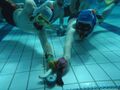 Octopush Two Players
 -
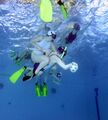 UW-rugby match


Advertise on WikiMD — 81,000+ full articles, ~900,000 total pages, ~250 million page views. Global reach, limited time promotional rates from $1/page/day. Learn more · View stats


Translate page: - East Asian
中文,
日本,
한국어,
South Asian
हिन्दी,
தமிழ்,
తెలుగు,
Urdu,
ಕನ್ನಡ,
Southeast Asian
Indonesian,
Vietnamese,
Thai,
မြန်မာဘာသာ,
বাংলা
European
español,
Deutsch,
français,
Greek,
português do Brasil,
polski,
română,
русский,
Nederlands,
norsk,
svenska,
suomi,
Italian
Middle Eastern & African
عربى,
Turkish,
Persian,
Hebrew,
Afrikaans,
isiZulu,
Kiswahili,
Other
Bulgarian,
Hungarian,
Czech,
Swedish,
മലയാളം,
मराठी,
ਪੰਜਾਬੀ,
ગુજરાતી,
Portuguese,
Ukrainian
About WikiMD • Contact • Disclaimer • Privacy • Copyright • Site statistics
Some content and images may originate from Wikimedia Commons or Wikipedia and remain subject to their stated licenses. Unless otherwise noted, eligible WikiMD content is available under CC BY-SA 4.0.
WikiMD Wellnesspedia — Free health & wellness information for patients, students, and health professionals.

