Thermal lance
Thermal lance
A thermal lance, also known as a burning bar or thermic lance, is a tool that applies the principles of thermodynamics to cut through virtually any material, including rock, concrete, and metal. It operates by burning a combination of oxygen and iron in a steel tube at temperatures that can exceed 4000 degrees Celsius.
History[edit]
The thermal lance was first developed in the early 20th century for use in metallurgy and mining. It was later adopted by the construction industry and emergency services for its ability to cut through materials quickly and efficiently.
Operation[edit]
The thermal lance operates by burning a combination of oxygen and iron in a steel tube. The iron rod is ignited at one end, and oxygen is then fed through the tube. The resulting reaction generates intense heat, which is focused at the tip of the lance. This allows the operator to cut or melt through most materials.
Applications[edit]
Thermal lances are used in a variety of industries, including construction, mining, and emergency services. In construction, they are used to cut through reinforced concrete and steel. In mining, they are used to break up hard rock. In emergency services, they are used to cut through wreckage in rescue operations.
Safety[edit]
Operating a thermal lance requires proper safety equipment, including heat-resistant gloves, a face shield, and a fire-resistant suit. The intense heat generated by the lance can cause severe burns and eye damage if proper precautions are not taken.
See also[edit]
This industrial tool related article is a stub. You can help WikiMD by expanding it.
Thermal lance gallery[edit]
-
Thermal lance 2004-8-4
-
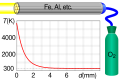 Thermic lance principle


Medical Disclaimer: WikiMD is for informational purposes only and is not a substitute for professional medical advice. Content may be inaccurate or outdated and should not be used for diagnosis or treatment. Always consult your healthcare provider for medical decisions. Verify information with trusted sources such as CDC.gov and NIH.gov. By using this site, you agree that WikiMD is not liable for any outcomes related to its content. See full disclaimer.
Credits:Most images are courtesy of Wikimedia commons, and templates, categories Wikipedia, licensed under CC BY SA or similar.
Translate page: - East Asian
中文,
日本,
한국어,
South Asian
हिन्दी,
தமிழ்,
తెలుగు,
Urdu,
ಕನ್ನಡ,
Southeast Asian
Indonesian,
Vietnamese,
Thai,
မြန်မာဘာသာ,
বাংলা
European
español,
Deutsch,
français,
Greek,
português do Brasil,
polski,
română,
русский,
Nederlands,
norsk,
svenska,
suomi,
Italian
Middle Eastern & African
عربى,
Turkish,
Persian,
Hebrew,
Afrikaans,
isiZulu,
Kiswahili,
Other
Bulgarian,
Hungarian,
Czech,
Swedish,
മലയാളം,
मराठी,
ਪੰਜਾਬੀ,
ગુજરાતી,
Portuguese,
Ukrainian


