Built-in breathing system
Built-in breathing system (BIBS) is a type of respiratory protection equipment designed to provide breathable air to individuals in environments where the ambient air is potentially hazardous or unsuitable for breathing. BIBS are commonly used in diving, aviation, and space travel, as well as in certain industrial settings.
Overview[edit]
A built-in breathing system typically consists of a gas supply, a regulator, and a mask or mouthpiece. The gas supply provides breathable air, often in the form of compressed oxygen or air mixture. The regulator controls the flow of gas from the supply to the user, while the mask or mouthpiece delivers the gas to the user's respiratory system.
Use in Diving[edit]
In scuba diving, BIBS are used to provide divers with a constant supply of breathable gas while underwater. This allows divers to remain submerged for extended periods of time without needing to surface for air. BIBS used in diving often include additional features such as a demand valve, which automatically supplies gas when the diver inhales, and a pressure gauge, which indicates the remaining gas supply.
Use in Aviation[edit]
In aviation, BIBS are used to provide pilots and crew members with breathable air at high altitudes, where the ambient air pressure is too low to support normal respiration. BIBS used in aviation typically include a pressure regulator to ensure that the supplied air is at a pressure suitable for breathing at the user's current altitude.
Use in Space Travel[edit]
In space travel, BIBS are used to provide astronauts with breathable air during spacewalks and other extravehicular activities. BIBS used in space travel often include a life support system, which removes carbon dioxide and other waste gases from the user's exhaled air and replenishes it with fresh oxygen.
Industrial Use[edit]
In industrial settings, BIBS are used to protect workers from hazardous gases and airborne contaminants. This includes environments such as chemical plants, nuclear facilities, and mines, where the ambient air may contain harmful substances.
See Also[edit]

This safety related article is a stub. You can help WikiMD by expanding it.
 | This aviation-related article is a stub. You can help WikiMD by expanding the page. |
 | This space- or spaceflight-related article is a stub. You can help WikiMD by expanding the page. |
-
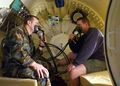 Navy divers testing built-in breathing masks inside a recompression chamber
 -
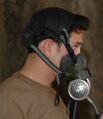 Side view of a BIBS mask
 -
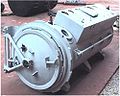 Hyperbaric oxygen therapy 1 person chamber
 -
 Sailors breathe oxygen after returning from diving on the USS Monitor


Advertise on WikiMD — 81,000+ full articles, ~900,000 total pages, ~250 million page views. Global reach, limited time promotional rates from $1/page/day. Learn more · View stats

Translate page: - East Asian
中文,
日本,
한국어,
South Asian
हिन्दी,
தமிழ்,
తెలుగు,
Urdu,
ಕನ್ನಡ,
Southeast Asian
Indonesian,
Vietnamese,
Thai,
မြန်မာဘာသာ,
বাংলা
European
español,
Deutsch,
français,
Greek,
português do Brasil,
polski,
română,
русский,
Nederlands,
norsk,
svenska,
suomi,
Italian
Middle Eastern & African
عربى,
Turkish,
Persian,
Hebrew,
Afrikaans,
isiZulu,
Kiswahili,
Other
Bulgarian,
Hungarian,
Czech,
Swedish,
മലയാളം,
मराठी,
ਪੰਜਾਬੀ,
ગુજરાતી,
Portuguese,
Ukrainian
About WikiMD • Contact • Disclaimer • Privacy • Copyright • Site statistics
Some content and images may originate from Wikimedia Commons or Wikipedia and remain subject to their stated licenses. Unless otherwise noted, eligible WikiMD content is available under CC BY-SA 4.0.
WikiMD Wellnesspedia — Free health & wellness information for patients, students, and health professionals.

