Pearl hunting
Pearl hunting is the act of recovering pearls from wild mollusks, usually oysters or mussels, in the sea or fresh water. Pearl hunting used to be the prime method of pearl harvesting. However, today, most pearls used in jewelry are farmed by a process known as pearl farming or pearl culture.
History[edit]
Pearl hunting has been practiced for over 4,000 years. The earliest evidence of pearl hunting comes from ancient Persia and India, where pearls were used for jewelry and decoration. In ancient Rome, pearls were considered the ultimate symbol of wealth and social standing. The Greeks held the pearl in high esteem for both its unrivaled beauty and its association with love and marriage.
Techniques[edit]
Pearl hunting was typically performed during the low tide. Divers would dive down to the ocean floor and manually collect the oysters or mussels. The collected mollusks would then be brought to the surface and opened to check for pearls. This was a labor-intensive and dangerous process, as divers could be attacked by predators or suffer from decompression sickness.
Decline[edit]
The popularity of pearl hunting declined with the development of pearl farming, which allowed for more controlled and less dangerous pearl production. Today, the majority of pearls are produced through farming, although some communities still practice traditional pearl hunting.
Cultural Significance[edit]
Pearl hunting has a significant cultural and historical value in many societies. In the Persian Gulf, for example, pearl hunting was a major part of the region's economy until the early 20th century. Today, pearl hunting is often celebrated in cultural festivals and events, serving as a link to the past.
See Also[edit]

 | This fishing-related article is a stub. You can help WikiMD by expanding the page. |
-
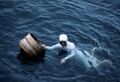 Ama diver
 -
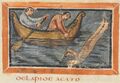 Medieval illustration of pearl hunting
 -
 Ceylon pearl merchant, 1849
 -
 Pearl hunting boat
 -
 Pearl diver
 -
 Pearl merchant Haji Ali bin Abdullah Al Habib
 -
 Diver's water clothes
 -
 Bahrain pearling license, 1942
 -
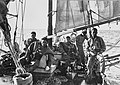 Pearl divers in Australia, 1939

.jpg)
_-_Copy.jpg)


Advertise on WikiMD — 81,000+ full articles, ~900,000 total pages, ~250 million page views. Global reach, limited time promotional rates from $1/page/day. Learn more · View stats

Translate page: - East Asian
中文,
日本,
한국어,
South Asian
हिन्दी,
தமிழ்,
తెలుగు,
Urdu,
ಕನ್ನಡ,
Southeast Asian
Indonesian,
Vietnamese,
Thai,
မြန်မာဘာသာ,
বাংলা
European
español,
Deutsch,
français,
Greek,
português do Brasil,
polski,
română,
русский,
Nederlands,
norsk,
svenska,
suomi,
Italian
Middle Eastern & African
عربى,
Turkish,
Persian,
Hebrew,
Afrikaans,
isiZulu,
Kiswahili,
Other
Bulgarian,
Hungarian,
Czech,
Swedish,
മലയാളം,
मराठी,
ਪੰਜਾਬੀ,
ગુજરાતી,
Portuguese,
Ukrainian
About WikiMD • Contact • Disclaimer • Privacy • Copyright • Site statistics
Some content and images may originate from Wikimedia Commons or Wikipedia and remain subject to their stated licenses. Unless otherwise noted, eligible WikiMD content is available under CC BY-SA 4.0.
WikiMD Wellnesspedia — Free health & wellness information for patients, students, and health professionals.

